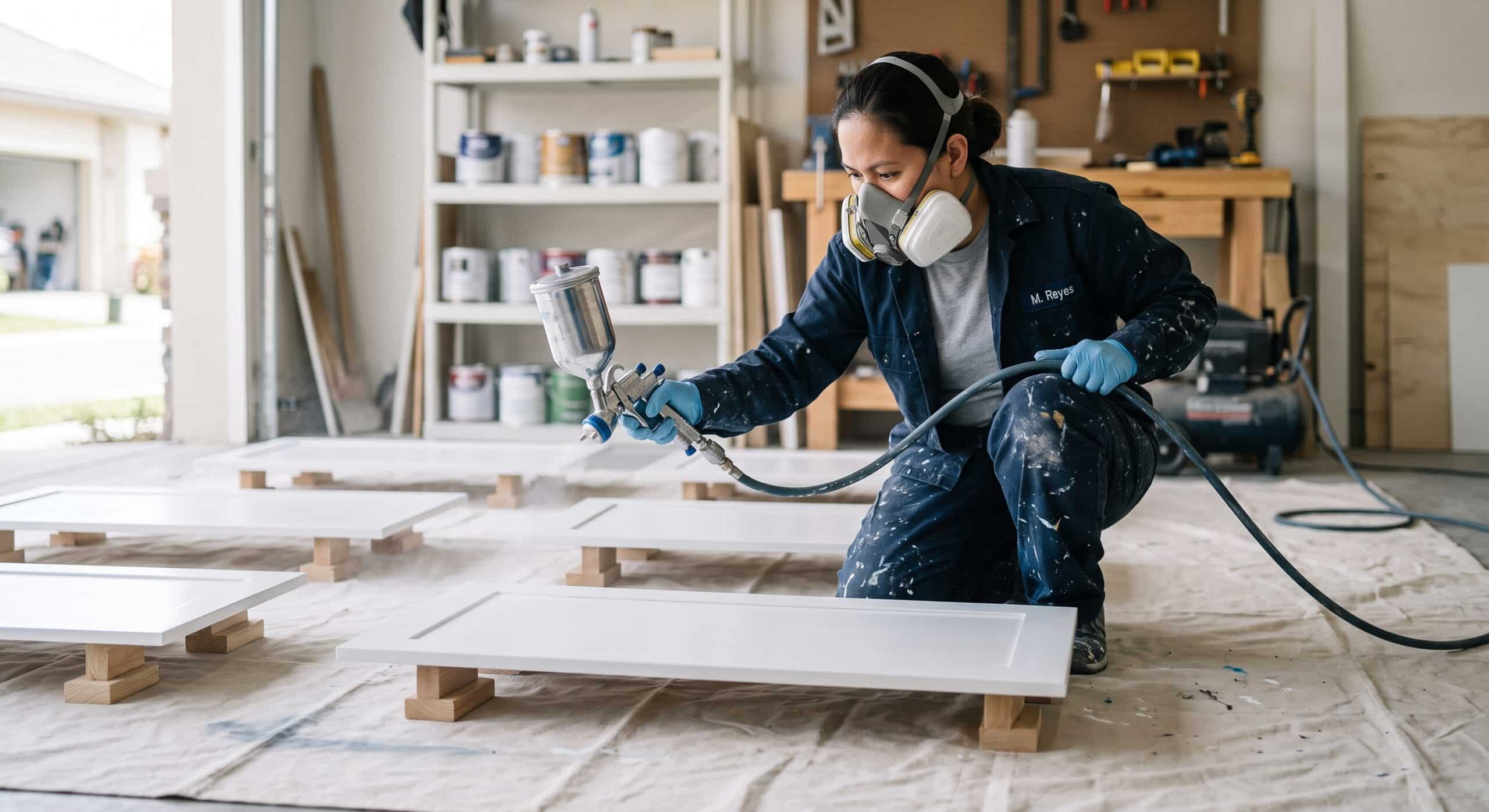
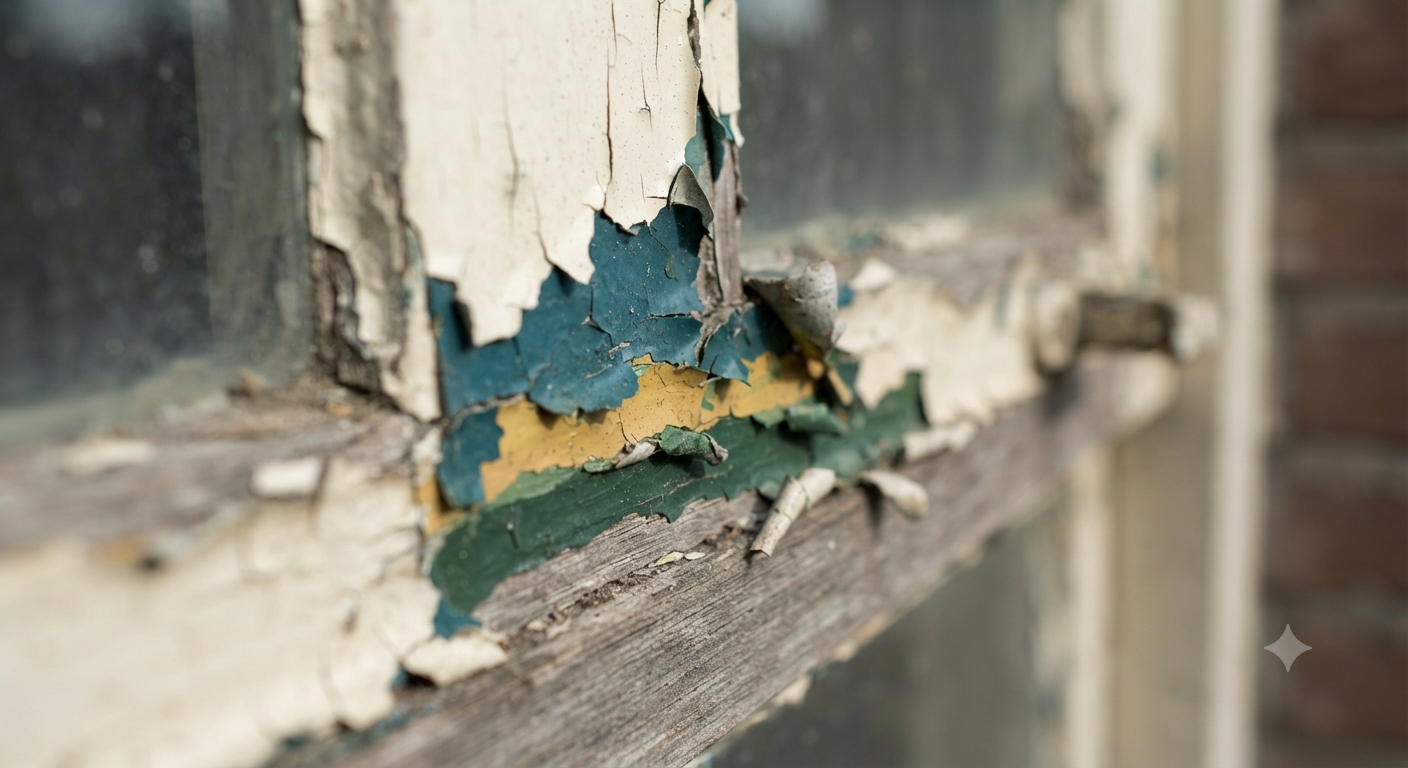
Using a paint stripper is one of the most effective ways to remove old, stubborn, or peeling paint from surfaces without damaging the material underneath.
Whether you are dealing with layers of latex paint on drywall, oil-based coatings on wood trim, or weathered finishes on brick, the right paint stripper makes the job significantly faster and more manageable.
Why Removing Old Paint the Right Way Actually Matters
Skipping proper paint removal often leads to bigger problems down the road.
Paint applied over a failing surface, whether it is peeling, chalking, or bonded poorly, will not adhere well regardless of how premium the new coat is.
The result is blistering, flaking, and premature failure, which costs more to fix than getting the surface prep right the first time.
In older Canadian homes, especially those built before 1978, there is also the question of lead-based paint.
Health Canada advises that paint in homes constructed before that era should be tested before any sanding, scraping, or chemical removal begins. Lead exposure is a serious health risk, particularly for children and pregnant women.
If you suspect lead paint is present, chemical stripping with proper containment is generally considered safer than mechanical methods like sanding, which can release fine particles into the air.
Moisture is another factor that Winnipeg homeowners deal with constantly through True Coat’s services.
Manitoba winters are brutal, and freeze-thaw cycles create real stress on exterior surfaces. Moisture trapped beneath paint layers accelerates peeling, which is why thorough surface preparation, including proper stripping when needed, is not optional for lasting results.
The Different Types of Paint Stripper and How They Work
Not all paint strippers are the same. Each type has a different chemical makeup, a different application method, and a different set of surfaces it works best on. Understanding the differences helps you choose the right product for your specific project.
Chemical-Based Strippers
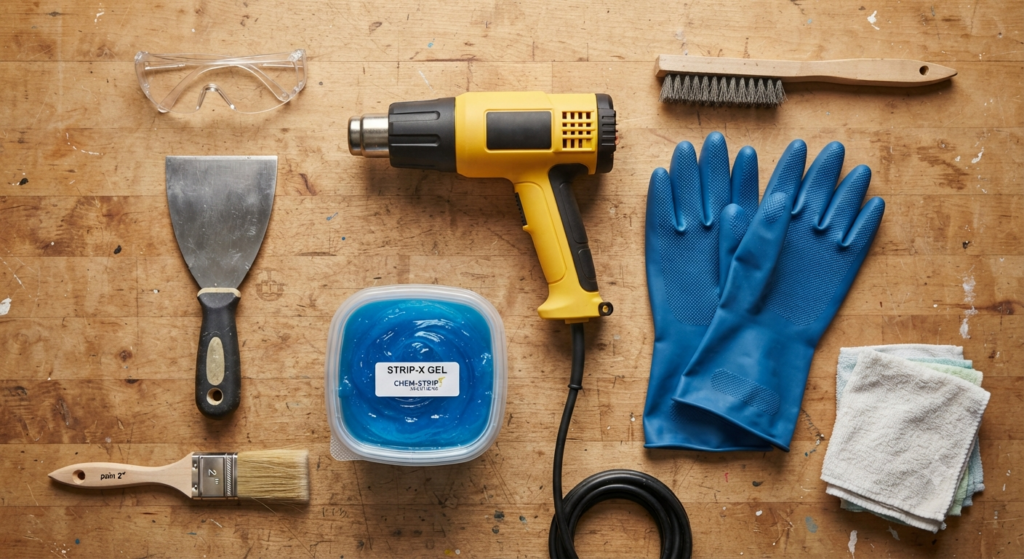
Chemical strippers work by breaking down the bond between the paint film and the surface below. They are applied as a gel, paste, or liquid, left to dwell for a set period, and then scraped away along with the loosened paint.
There are two broad categories here:
- Solvent-based strippers: These typically contain methylene chloride or similar strong solvents. They work fast, often within 15 to 30 minutes, and are effective on multiple paint layers. However, they require heavy-duty respiratory protection, excellent ventilation, and careful disposal. In Canada, some formulations have been restricted under the Canadian Environmental Protection Act due to health and environmental concerns.
- Caustic strippers: These use sodium hydroxide (lye) as the active ingredient. They work well on thick paint buildups and are commonly used on metal surfaces or masonry. They require neutralisation after use and can raise the grain on wood if left too long.
- Biochemical or low-VOC strippers: These use plant-derived solvents like dibasic esters or benzyl alcohol. They work more slowly, sometimes requiring an overnight dwell time, but they are considerably safer to use indoors and are better for the environment.
Heat-Based Removal
Heat guns and infrared paint removers soften paint by raising the surface temperature, allowing you to scrape it away cleanly.
Heat tools are effective on wood trim, doors, and furniture but should never be used near lead paint because heating lead-based coatings releases toxic fumes.
They are also not ideal near glass, as rapid temperature changes can crack window panes.
Mechanical Methods
Sanders, wire brushes, and scrapers are the most basic approaches. They work fine for small areas or lightly bonded paint but are slow, physically demanding, and generate significant dust.
For interior walls, mechanical removal risks gouging drywall paper, which then requires skim coating to repair.
If you want to understand how different paint types respond to stripping methods, the formulation of the existing coating matters just as much as the method you choose.
Comparing Paint Stripper Types: A Quick Breakdown
| Type | Best For | Speed | Safety Level | Cost (CAD) |
|---|---|---|---|---|
| Solvent-based | Multiple layers, fast jobs | Fast (15-30 min) | Low (high VOC) | C$20-C$50 per litre |
| Caustic (lye) | Metal, masonry, heavy buildup | Medium (1-2 hrs) | Moderate | C$15-C$40 per litre |
| Biochemical/low-VOC | Indoor use, wood, DIY projects | Slow (4-24 hrs) | High | C$25-C$60 per litre |
| Heat gun | Wood trim, furniture, doors | Medium | Moderate | C$40-C$120 (tool cost) |
| Mechanical sanding | Small patches, lightly bonded paint | Slow | Moderate (dust) | Minimal (labour-heavy) |
How to Use Paint Stripper Safely and Effectively
Applying a paint stripper is straightforward when you follow the right steps. Rushing the process or skipping safety precautions is where most DIY projects go sideways.
Step 1: Test and prepare the surface. Clean the area of grease, dirt, and loose paint flakes. If you suspect lead paint, use a lead test kit available at most Canadian hardware stores before doing anything else.
Step 2: Protect surrounding areas. Cover floors and adjacent surfaces with plastic sheeting. Remove hardware, outlet covers, and anything that could be damaged by chemical contact.
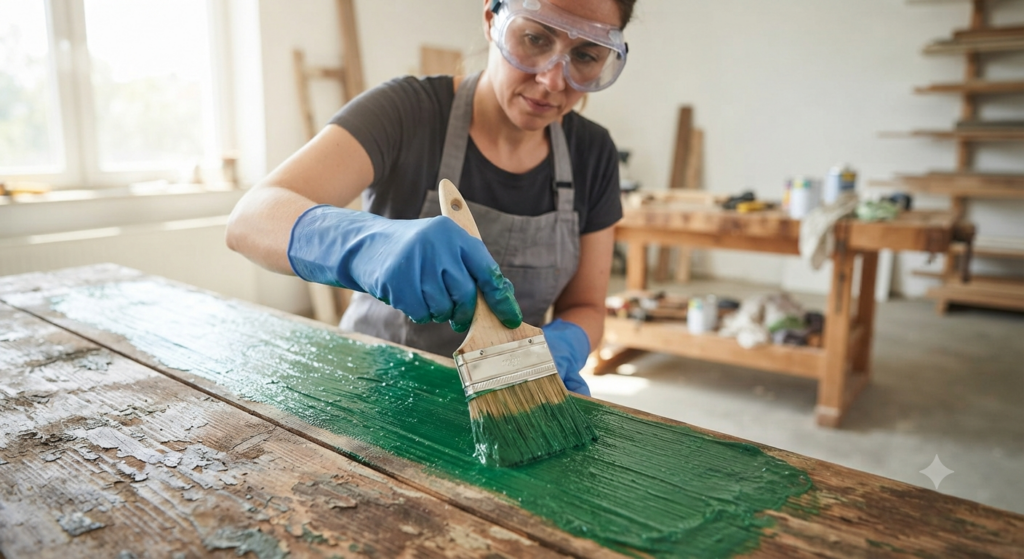
Step 3: Apply the stripper generously. Use a natural-bristle brush or a chemical-resistant applicator. Apply in one direction and do not overwork it. Thickness matters: a thin coat dries out before it can work.
Step 4: Allow adequate dwell time. Follow the manufacturer’s instructions. Biochemical strippers often need significantly longer dwell times than solvent-based options.
Step 5: Scrape and clean. Use a plastic scraper to avoid gouging the surface. Work in sections and dispose of the paint waste according to your municipality’s hazardous waste guidelines. In Winnipeg, the City of Winnipeg’s Eco-Stations accept paint and chemical waste at no charge.
Step 6: Neutralise and rinse. Some strippers, especially caustic types, require a neutralising wash before the surface is ready for new paint. Skip this step and the new coating may fail to bond properly.
If you are planning to paint a wall after stripping, make sure the surface is completely dry and free of residue before applying primer.
Surface-Specific Considerations: Wood, Brick, Metal, and Drywall
Different surfaces respond differently to stripping methods, and using the wrong one can cause lasting damage.
| Surface | Recommended Stripper | Caution |
|---|---|---|
| Wood (interior trim) | Biochemical or heat gun | Avoid caustic lye; raises wood grain |
| Brick or masonry | Caustic or pressure wash | Test small area first; porous surfaces absorb chemicals |
| Metal (railings, doors) | Caustic or solvent-based | Rinse thoroughly to prevent rust |
| Drywall | Avoid chemical; use light scraping or sanding | Chemical strippers damage drywall paper |
| Concrete floors | Caustic or mechanical grinder | Requires neutralisation before recoating |
For exterior surfaces like brick, the prep work is especially important. If you are working on masonry and plan to repaint afterward, understanding exterior paint for brick is essential for choosing a coating that bonds properly to the stripped surface.
Things to Know
- Paint strippers that contain methylene chloride are still available in Canada for commercial and professional use, but Health Canada recommends avoiding them for residential DIY projects due to serious inhalation risks.
- Cold temperatures slow down the chemical reaction in most strippers significantly. In Winnipeg winters, indoor work should be done in a space heated to at least 15°C for the product to work as intended.
- Not all paint strippers are compatible with all surfaces. Always check the label for the specific substrate before applying.
- Stripping paint from a rental property in Manitoba requires the same care as owner-occupied homes. Lead paint regulations still apply, and improper removal could expose landlords to liability.
- Some older Winnipeg homes with intricate woodwork or heritage trim benefit more from careful chemical stripping than mechanical sanding, which can damage fine detail.
- Biodegradable strippers are a growing category in Canada, offering a lower environmental footprint while still delivering solid performance on most residential surfaces.
When to Call a Professional Instead of DIYing It
There is a point where the scale, the surface complexity, or the safety risk of a stripping project makes it smarter to hire a professional rather than tackle it yourself.
If you are dealing with a large exterior surface, confirmed lead paint, or a heritage property with irreplaceable architectural detail, professional painters have the equipment, training, and protective gear to handle the job correctly.
True Coat is a licensed and fully insured painting company based in Winnipeg, Manitoba, serving both residential and commercial clients with expertise you can learn more about through their about us page.
Their team has hands-on experience with surface preparation at every level, from light interior touch-ups to full exterior restoration. You can browse their full scope of work online, or reach out to them directly.
If you are looking for more context on finding the right team, the post on best interior painting companies is worth a read, as is this useful resource on residential painting in Winnipeg and this deeper look at what the best approach to exterior painting for house projects actually involves.
Ready to Refresh Your Space?
Before you buy any chemical product, take five minutes to assess your surface, check for lead paint if your home is older, and decide whether the project is realistically within your skill set and safety comfort zone.
If it is, choose a low-VOC biochemical stripper for indoor work and a caustic type for exterior masonry. If it is not, call True Coat for a free quote and get the job done right from the start.
The Bottom Line on Paint Stripper
Choosing the right paint stripper is not complicated once you know what you are working with. Match the product to the surface, respect the dwell time, follow safe disposal practices, and test for lead paint in any older home before you begin.
For straightforward interior jobs, a biochemical stripper applied with patience will get excellent results.
For larger or more complex exterior work, working with an experienced Winnipeg painting team like True Coat takes the guesswork out of surface preparation and gives you a finish that holds up through Manitoba’s demanding climate. Start with a clear plan, use the right product, and the results will speak for themselves.
Frequently Asked Questions
What is best for stripping paint?
The best method depends on the surface: biochemical strippers work well for indoor wood, while caustic strippers suit masonry and metal.
For most DIY projects in Canadian homes, a low-VOC biochemical stripper offers a solid balance of effectiveness and safety. On exterior surfaces or heavy paint buildup, a caustic (lye-based) product works faster.
What is the best paint stripper?
There is no single best product. The right paint stripper depends on your surface type, how many layers you are removing, and whether you are working indoors or outdoors.
Biochemical options are widely recommended for indoor residential use because they have lower health risks. For faster results on metal or masonry, caustic formulas are a reliable choice.
How to quickly remove old paint?
The fastest way to remove old paint is with a solvent-based stripper or a heat gun, both of which can loosen paint in under 30 minutes on the right surface.
Solvent-based products work on multiple layers in one application. Heat guns are effective on wood trim and doors but require careful technique to avoid scorching the surface.
Does paint remover actually work?
Yes, paint remover works effectively when the right product is matched to the surface and given adequate dwell time.
The most common reason paint remover seems ineffective is that it was applied too thinly or scraped before the dwell time was complete. Generous application and patience are the two most important factors.
What is the strongest chemical to remove paint?
Methylene chloride-based strippers are among the strongest available, capable of removing multiple paint layers in 15 to 30 minutes.
However, they carry significant health risks and are not recommended for DIY residential use in Canada. Health Canada advises using low-VOC or biochemical alternatives wherever possible, reserving high-strength solvents for professionally managed projects with proper ventilation and protective equipment.