Paint types refer to the base and finish categories that determine how paint performs on different surfaces.
Choosing the right formula for your project, whether latex, oil-based, acrylic, or a specialty coating, directly affects how long it lasts, how it looks, and how easy it is to apply.
The four main categories most homeowners work with are water-based latex, oil-based alkyd, acrylic, and specialty coatings, each suited for specific surfaces and conditions.
If you’re painting an interior room, a wooden deck, or a commercial space in Winnipeg, picking the right option saves you time, money, and frustration. Read on to learn how each formula works and which one fits your next project best.
What Are Paint Types?
These categories are defined by their base ingredients, finish level, and intended use. The base determines how paint adheres to a surface, how quickly it dries, and how durable it becomes once cured. The finish refers to the sheen level, from flat matte to high gloss, which affects both appearance and cleanability.
Every formula is designed with a specific job in mind. Some are built to resist moisture in bathrooms. Others are formulated to withstand Canadian winters on exterior walls. Using the wrong option can lead to peeling, poor adhesion, or a finish that simply does not hold up over time.
What Are the Main Paint Types Used in Homes?
There are four main categories that cover most residential and commercial painting needs. Each has a distinct formula, dry time, and best-use scenario. Here is a breakdown of each one and what it does best.
Water-Based Latex Paint
Latex is the most widely used paint type in Canada. It uses water as a carrier, which makes it low in odour, fast-drying, and easy to clean up with soap and water. Latex formulas are ideal for interior walls, ceilings, and even some exterior surfaces. They expand and contract with temperature changes, making them a great fit for homes in Winnipeg where winters are harsh.
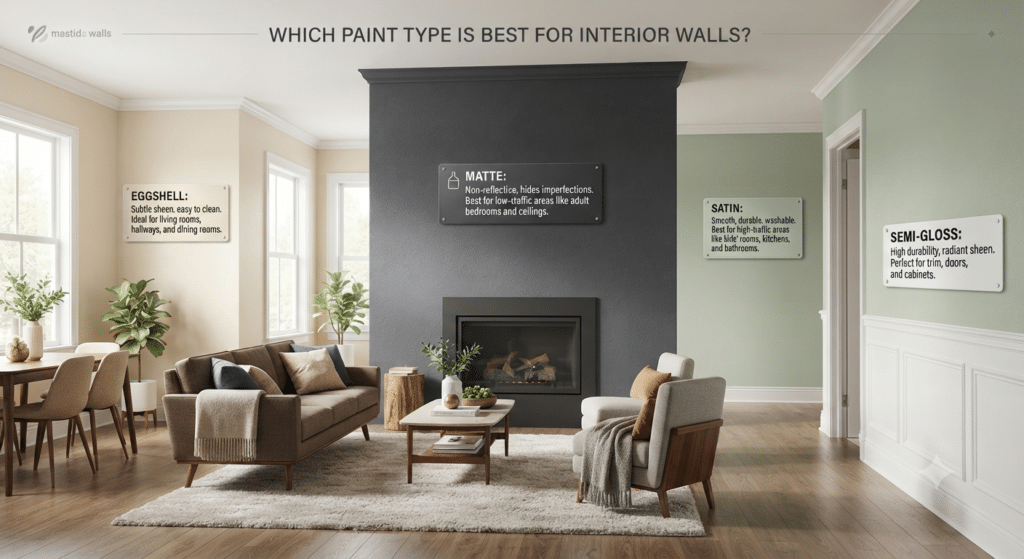
Latex comes in several finishes: flat, eggshell, satin, semi-gloss, and gloss. Flat is best for ceilings and low-traffic areas. Satin and eggshell work well in living rooms and bedrooms. Semi-gloss and gloss hold up in kitchens, bathrooms, and trim where scrubbing is common.
Oil-Based Alkyd Paint
Oil-based formulas use a petroleum or alkyd resin as the base. They take longer to dry, usually 24 hours or more, and require mineral spirits or paint thinner for cleanup. However, this formula creates a very hard, durable finish that resists stains and wear. It works well on doors, trim, cabinets, and metal surfaces where a tough coat is needed.
One downside is the strong odour and higher VOC content. In Canada, many homeowners are moving toward water-based alternatives, but oil-based alkyd remains a top choice for high-traffic surfaces and furniture refinishing.
Acrylic Paint
Acrylic formulas are water-based but use acrylic polymers for a stronger, more flexible finish than standard latex. They dry faster than oil-based options and offer better resistance to fading, cracking, and moisture. Acrylic is a popular choice for exterior painting because it holds up well against sun, rain, and temperature swings.
Indoors, acrylic is used where durability matters most, such as in high-traffic hallways, kids’rooms, and laundry areas. It is also easier to touch up than oil-based coatings because water cleans the tools.
Specialty Paint Types
Specialty paint types are formulated for very specific surfaces or effects. Examples include primer-sealer formulas for bare drywall, masonry coatings for concrete and brick, rust-resistant options for metal, and limewash for a natural, textured finish.
Floor coatings are another example, designed to handle foot traffic, vehicle weight, and moisture in garages or basements.
If you’re considering a specialty finish like limewash for your home, you can read more about limewash paint in Canada to see if it suits your space.
Paint Types at a Glance
| Category | Base | Best For | Dry Time |
| Latex | Water | Interior walls, ceilings | 1-2 hours |
| Oil-Based Alkyd | Petroleum/Alkyd | Trim, doors, cabinets | 24+ hours |
| Acrylic | Water + Acrylic Polymer | Exterior, high-traffic interiors | 2-4 hours |
| Specialty | Varies | Concrete, metal, limewash, floors | Varies |
Which Paint types Is Best for Interior Walls?
For most interior walls, a water-based latex or acrylic formula is the best option. These dry quickly, have low odour, and are easy to clean. The finish you choose matters just as much as the base. Here is a quick guide to choosing the right coating by room:
Living Rooms and Bedrooms
Eggshell and satin finishes work well in these spaces. They offer a soft sheen that hides small imperfections while still being wipeable. Flat finishes can be used on ceilings to reduce glare and give a clean, uniform look.
Kitchens and Bathrooms
Semi-gloss and gloss finishes are ideal in areas exposed to steam, grease, and frequent cleaning. These options resist moisture and allow you to wipe down surfaces without damaging the coating.
Trim, Doors, and Cabinets
For woodwork and trim, oil-based or high-gloss acrylic formulas give the hardest finish. They stand up to daily contact, resist chipping, and clean up easily. Many painters in Winnipeg prefer a water-based alkyd for trim because it offers similar durability with less odour.
For kitchen cabinets specifically, it helps to know what professionals recommend. You can check out our guide on the best kitchen cabinet painting approach in Winnipeg for more detail.
Which Paint Types Work Best for Exterior Surfaces?
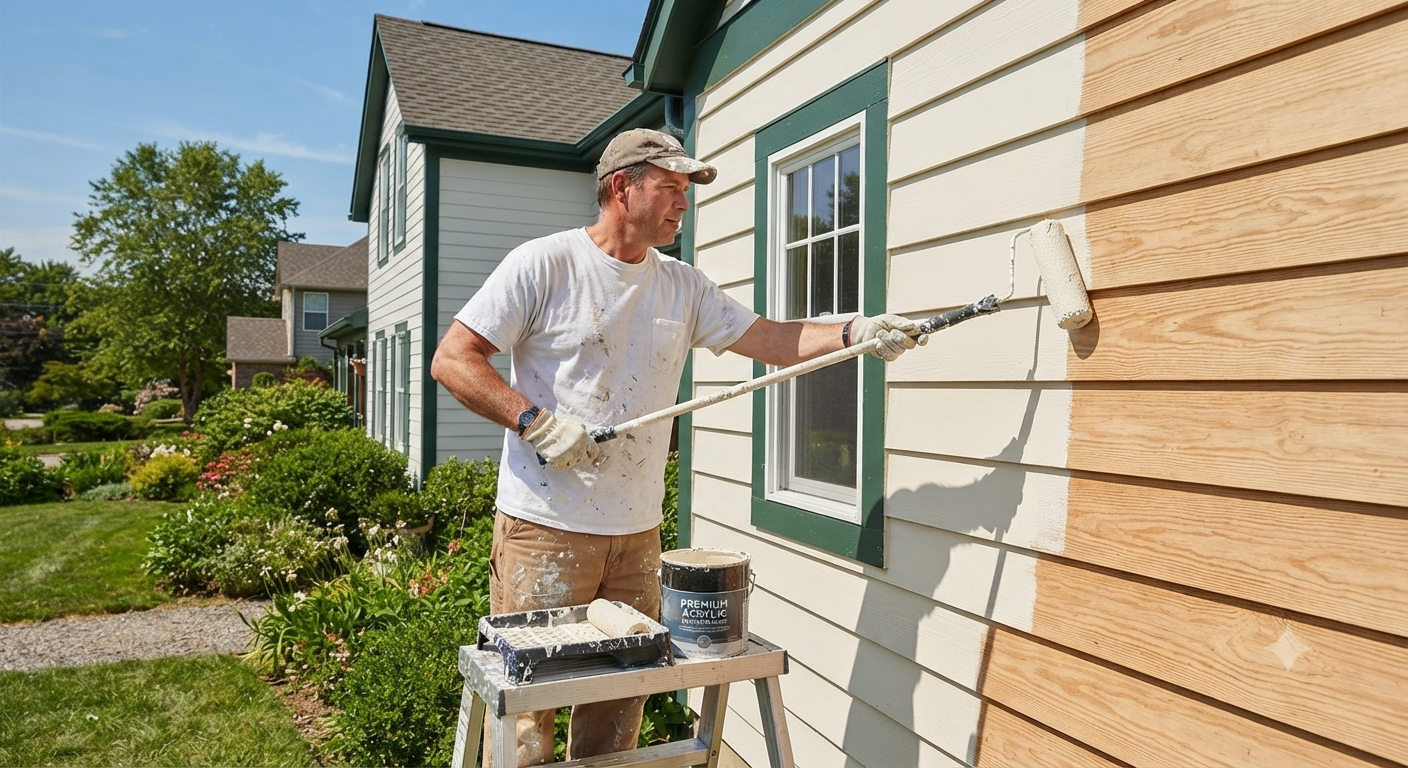
Exterior surfaces need coatings that can handle UV rays, moisture, and temperature changes. Acrylic latex formulas are the most popular for exterior use because they stay flexible in cold weather, breathe through the surface to prevent peeling, and resist fading better than oil-based options.
For wood siding, acrylic bonds well and expands with the wood as temperatures shift. For masonry, concrete, or stucco, masonry-specific coatings are formulated to penetrate the porous surface and create a lasting seal.
If you want to know how exterior painting projects are approached in detail, take a look at our article on the best approach to exterior painting for house projects.
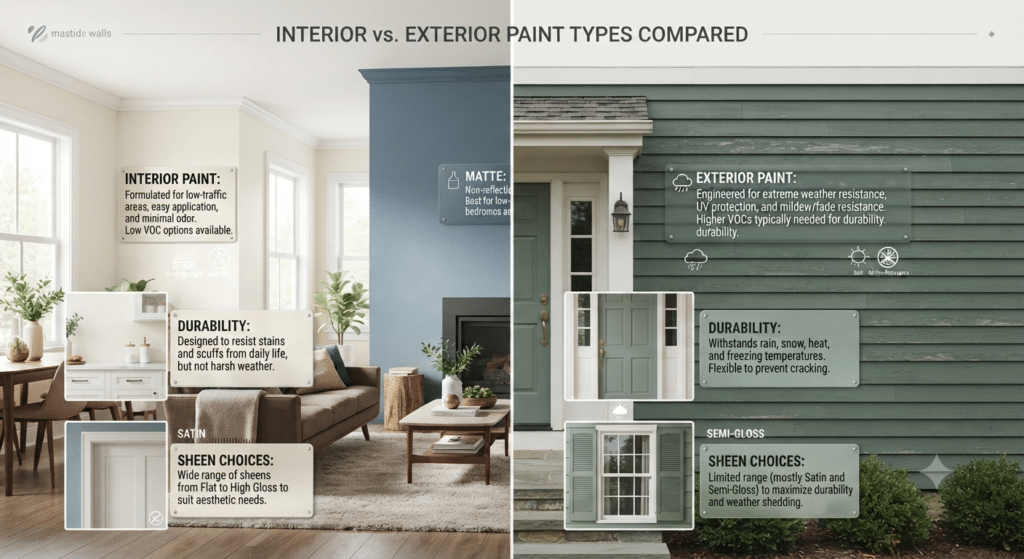
Interior vs. Exterior Coatings Compared
| Feature | Interior Formulas | Exterior Formulas |
| Main Base | Latex or Acrylic | Acrylic or Oil-Based |
| Finish Options | Flat to High Gloss | Flat to Satin (mostly) |
| Durability Need | Moderate | High (weather resistant) |
| VOC Levels | Low to Moderate | Moderate to High |
| Dry Time | 1-4 hours | 2-6 hours |
Things To Know Before Choosing a Paint Type
- Always check the surface material first. Concrete, wood, metal, and drywall all respond differently to different coatings and formulas.
- Primer matters. Applying a primer before your chosen formula improves adhesion and can reduce the number of coats needed.
- Higher gloss finishes are easier to clean but show surface imperfections more. Flat finishes hide texture but are harder to wipe down.
- In Canada, low-VOC formulas are increasingly preferred for health and indoor air quality, especially in homes with children or pets.
- Two-component coatings, also called 2K paints, require mixing a base with a hardener before application. They cure chemically rather than by drying, creating an extremely hard surface used in industrial or automotive settings.
- Base 4 is the most transparent tint base, used when mixing very deep or rich custom colours. It contains very little pigment and must always be tinted before use.
Get Expert Help Choosing the Right Paint Type in Winnipeg
True Coat is a licensed and insured painting company serving Winnipeg’s residential and commercial clients. Whether you’re unsure which formula suits your interior walls or need a full exterior repaint, the team at True Coat can help you choose the right coating and apply it with precision. Get in touch for a free estimate and see how the right finish can transform your space.
Wrapping Up
Knowing your options makes every painting project go smoother. From latex and acrylic for everyday walls to oil-based alkyd for trim and specialty coatings for concrete or metal, each formula has a purpose. The best choice depends on your surface, your room, and how much wear it will face. Start by identifying what you’re painting, then match it to the right coating for a finish that holds up for years.
Frequently Asked Questions About Paint Types
What are the 4 types of paint?
The four main categories are latex (water-based), oil-based alkyd, acrylic, and specialty coatings. Each serves different surfaces and purposes. Latex is the most common for interior walls, while oil-based formulas are preferred for trim and cabinets. Acrylic is great for exteriors, and specialty coatings cover surfaces like concrete, metal, and masonry.
What are the different types of paints?
Common options include latex, oil-based, acrylic, enamel, chalk, masonry, floor, and limewash coatings. Each formula is designed for a specific surface or effect. Enamel offers a very hard, smooth finish, while chalk creates a matte, vintage look. The right choice depends on what you’re painting and the finish you want.
What are the 8 types of paint?
Eight commonly recognized categories include latex, oil-based, acrylic, enamel, chalk, masonry, floor coatings, and specialty options like limewash or metallic finishes. Some lists also include milk paint and textured formulas. Each has a different composition suited to a specific surface, finish, or environment.
What is 2 component paint?
Two-component paint, also called 2K paint, requires mixing a base with a hardener before use. Once mixed, a chemical reaction causes it to cure into an extremely hard, durable film. This type of coating is commonly used in automotive, industrial, and commercial floor applications where maximum durability is required.
What is base 4 paint?
Base 4 is a transparent tint base used when mixing very deep or rich custom colours. It contains very little pigment on its own and must be tinted at a paint store before use. If applied without tinting, the result will be a nearly clear, milky coat. It is specifically designed to hold high amounts of colorant without affecting the chemistry of the final finish.