
Paint for kitchen cabinets holds up best when it’s alkyd, latex, or a cabinet-specific formula that can handle grease, moisture, and daily wear. The finish type matters just as much as the colour — satin and semi-gloss are usually the go-to picks because they’re easier to wipe down.
Prepping your surfaces properly before painting is what separates a job that lasts years from one that chips in months. So if you’re thinking about redoing your kitchen cabinets yourself or hiring someone to do it, knowing your options makes a real difference.
What Is the Best Paint for Kitchen Cabinets?
The short answer? Alkyd paint or a high-quality latex formula made specifically for cabinets. Both harden into a tough, smooth shell that can take the daily grind of a kitchen environment.
Alkyd (also called oil-based) has been the traditional favourite for decades because it levels out beautifully and dries rock solid. Water-based cabinet paints have caught up though, and a lot of painters now prefer them because they dry faster, smell less, and clean up with water.
What you want to avoid is regular wall paint. It’s not built for the abuse that kitchen cabinets take. Cooking splatter, steam, constant opening and closing, cleaning products — all of that breaks down a standard wall paint pretty fast.
So when you’re looking at paint for kitchen cabinets, stick to products that are specifically labeled for trim, cabinets, or hard surfaces.
What Are the Main Types of Paint for Kitchen Cabinets?
There are a few different formulas out there, and each one has its strengths. Picking the right one really comes down to how much prep you want to do, how long you want to wait between coats, and what kind of finish you’re after.
Alkyd (Oil-Based) Paint
This is the classic cabinet paint. It levels itself out as it dries, which means fewer brush marks and a really smooth finish. It takes longer to cure — sometimes up to a week before you can really start using the cabinets hard — but the result is incredibly durable.
One downside is the fumes. You’ll need proper ventilation and you have to clean brushes with mineral spirits or paint thinner.
Water-Based Latex Paint
Modern latex cabinet paints have come a long way. Look for ones with a urethane or acrylic alkyd blend — those are the ones that actually hold up. They dry faster, usually within a couple of hours between coats, and the cleanup is just soap and water.
If you’re painting yourself and don’t want to deal with strong solvent smells, this is probably the better choice for paint for kitchen cabinets.
Cabinet-Specific Enamel
These are paints built from the ground up for cabinets and trim. They’re formulated to resist chipping, block stains, and stay scrubbable.
They’re usually worth the extra cost because you won’t be repainting in two years. A lot of professional painters lean toward enamel finishes when doing kitchen cabinet jobs specifically because of how hard they cure.
Chalk Paint
Chalk paint is popular for furniture and sometimes gets used on cabinets too. It’s easy to apply and gives a matte, vintage feel. But it needs to be sealed with a wax or topcoat to hold up in a kitchen, and even then it’s not as tough as alkyd or enamel. It’s more of a stylistic choice than a practical one for a high-use space.
Paint Type Comparison
Here’s a quick breakdown of how the main paint types compare when used as paint for kitchen cabinets:
| Paint Type | Durability | Dry Time | Best For |
| Alkyd (Oil-Based) | Very High | 6-8 hrs per coat | Long-lasting results |
| Latex / Acrylic Alkyd | High | 2-4 hrs per coat | DIY-friendly projects |
| Cabinet Enamel | Very High | 4-6 hrs per coat | Professional finishes |
| Chalk Paint | Low-Medium | 30-60 min per coat | Decorative looks only |
Which Paint Finish Works Best on Kitchen Cabinets?
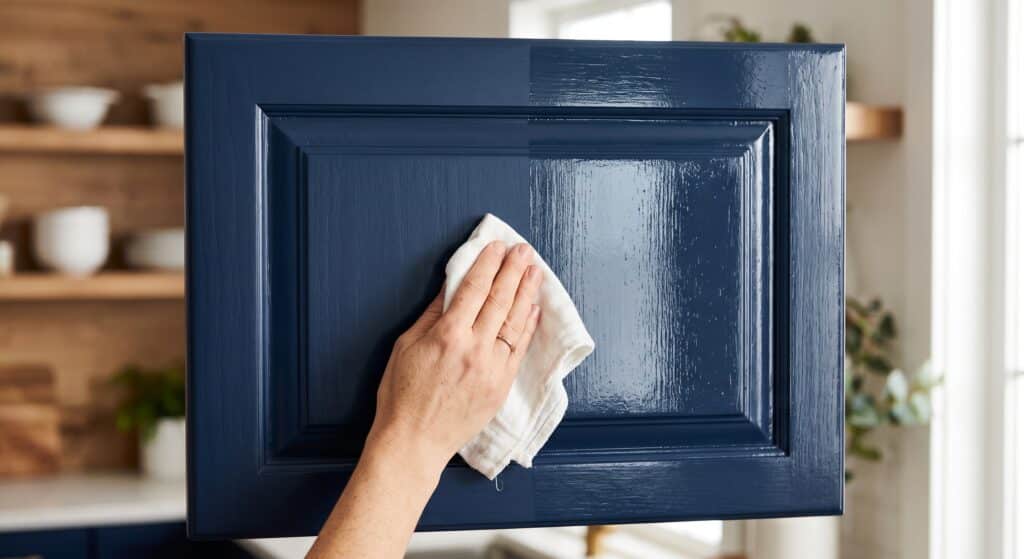
The finish — meaning the sheen level — matters a lot. Here’s the thing: the higher the sheen, the easier the surface is to wipe clean. For kitchen cabinets that deal with cooking grease and splashes, a washable finish is a must.
Satin and semi-gloss are the two most popular choices for paint for kitchen cabinets. Satin has a soft glow that hides minor surface imperfections and still cleans up easily. Semi-gloss reflects more light and tends to be even tougher, making it a solid choice for cabinet doors that get touched constantly. Matte or flat finishes are pretty much off the table in a kitchen — they absorb grease and stains and are really hard to clean without scuffing the paint.
A gloss finish is also an option if you want a super shiny look, but it shows every ding and brush mark clearly, so the surface prep has to be near perfect before you apply it.
How Do You Prep Kitchen Cabinets Before Painting?
Prep is honestly where most paint jobs either succeed or fail. You can have the best paint for kitchen cabinets money can buy, but if the surface isn’t clean, deglossed, and primed properly, it’s going to peel or chip within a year.
Step 1: Remove the Doors and Hardware
Take everything off — doors, hinges, drawer fronts, handles. Painting around hardware looks sloppy and makes it harder to get clean edges. Number the doors with tape and a marker so you know which cabinet each one came from.
Step 2: Clean Everything Thoroughly
Kitchen cabinets collect grease over time, even if they look clean. Wipe everything down with a degreaser or a mix of dish soap and warm water. Let the surfaces dry completely before moving on.
Step 3: Sand and Degloss
Lightly sand the surfaces with 120-150 grit sandpaper. You’re not trying to strip the old finish, just rough it up enough for the primer to grip. Wipe away all the dust with a tack cloth before priming.
Step 4: Apply Primer
Use a bonding primer, especially if you’re going from a dark colour to a light one or if the cabinets have a slick factory finish. Primer helps the top coat stick and blocks any stains from bleeding through. Two thin coats of primer are better than one thick one.
Things to Know Before You Start Painting Kitchen Cabinets
A few things most people don’t think about until they’re halfway through the job:
Temperature and humidity affect drying time. If it’s too humid or cold in your kitchen, paint takes longer to cure and can get tacky. Ideally, paint in conditions above 15C with low humidity.
Two coats is the minimum. One coat won’t give you even coverage and won’t hold up as long. Most pros apply two to three thin coats for the best result.
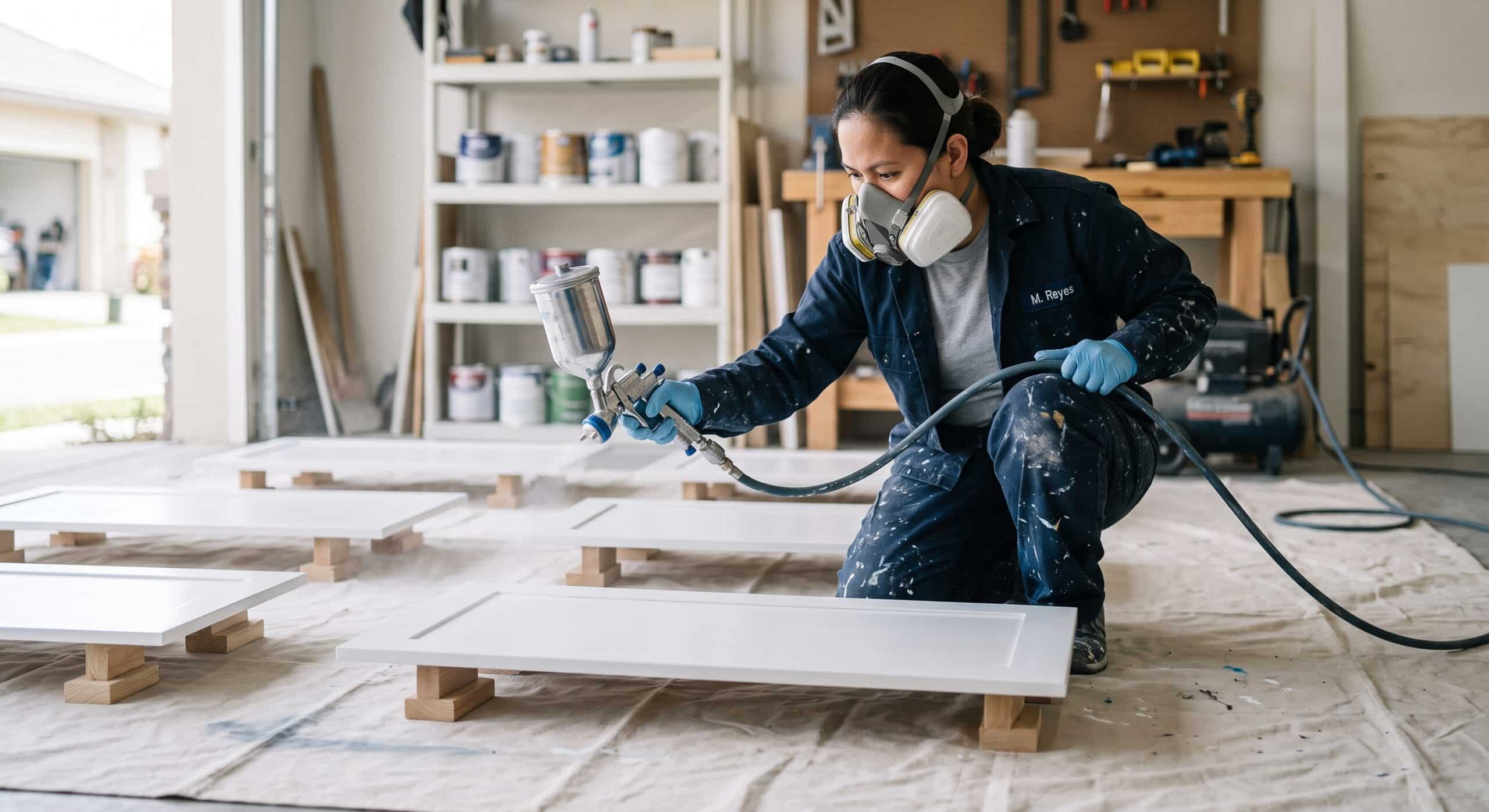
Brush vs. spray vs. roller. A small foam roller gives a smooth finish with fewer brush marks. A spray gun is what pros use for the smoothest result. Brushes work but take more skill to get a clean look.
Full cure takes time. Even when paint feels dry to the touch, it hasn’t fully hardened. Avoid scrubbing or placing heavy items on shelves for at least two weeks.
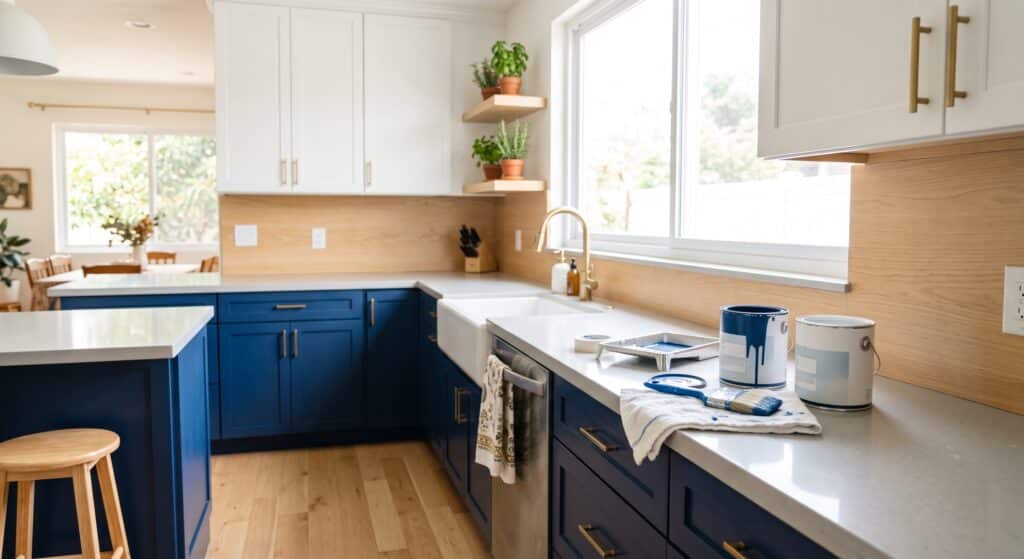
Colour choice affects how your kitchen feels. White and off-white open up smaller kitchens. Navy, forest green, and charcoal are popular right now for a bold look. Warm neutrals like greige work well with wood countertops and flooring.
Finish Sheen Comparison for Kitchen Cabinets
Choosing the right sheen level is just as important as the paint formula. Here’s how the main options stack up for paint for kitchen cabinets:
| Sheen Level | Washability | Hides Imperfections | Recommended |
| Matte / Flat | Poor | Yes | Not for kitchens |
| Eggshell | Fair | Somewhat | Low-traffic areas only |
| Satin | Good | Yes | Yes, great choice |
| Semi-Gloss | Very Good | Partially | Yes, top pick |
| High-Gloss | Excellent | No | If prep is perfect |
Should You DIY or Hire a Professional to Paint Kitchen Cabinets?
It really depends on your skill level and how much time you have. Painting cabinets yourself is doable, but it’s not a quick weekend job.
You’re looking at several days of work when you factor in the prep, priming, and multiple coats. And if you skip any of those steps, the paint for kitchen cabinets won’t hold up the way it should.
Hiring a professional means a cleaner result, faster turnaround, and a finish that’s much harder to get with DIY tools. Pros often have sprayers that eliminate brush marks entirely, and they know which primers and paints bond best to different cabinet materials.
If your cabinets have a thermofoil or laminate surface, for example, getting the paint to stick without peeling is tricky — a professional will know how to handle that.
If you want your cabinets to look like new and stay that way for years, it’s worth getting a professional opinion. True Coat offers a free estimate for kitchen cabinet painting in Winnipeg — you can reach the team through the contact page to talk through your options.
More Painting Resources Worth Reading
If you found this helpful, check out some related reads:
Best kitchen cabinet painter Winnipeg — A closer look at what makes a cabinet painter worth hiring locally.
Best interior painting companies — What to look for when choosing an interior painter.
Limewash paint in Canada — An alternative finish option worth knowing about.
For more on what True Coat offers, take a look at the full list of services and past completed projects.
Picking the Right Paint for Kitchen Cabinets: Final Takeaways
The right paint for kitchen cabinets makes a huge difference in both how the finished job looks and how long it stays looking good. Alkyd and high-quality water-based cabinet paints are your best bets.
Satin and semi-gloss sheens are the most practical for a kitchen environment. And prep — cleaning, sanding, priming — is what everything else depends on.
Whether you’re going the DIY route or handing the job off to a pro, the choices you make at the start will shape what the cabinets look like two or three years from now. Take your time with the prep, don’t rush the drying, and pick a paint that’s actually made for this kind of surface.
Frequently Asked Questions
What is the best type of paint for kitchen cabinets?
Alkyd or cabinet-specific enamel paint.
These formulas are built to resist moisture, grease, and daily handling. High-quality latex paints with an acrylic-alkyd blend are also a great option if you want faster drying times and easier cleanup.
Do I need to prime kitchen cabinets before painting?
Yes, priming is essential.
Primer helps the paint for kitchen cabinets bond properly and prevents stains or old colours from bleeding through. A bonding primer is especially useful on slick factory finishes or laminate surfaces.
How many coats of paint do kitchen cabinets need?
At least two coats after priming.
Thin, even coats give better results than one thick coat. Most professionals apply two to three coats to get even colour coverage and the durability needed in a kitchen setting.
Can I use regular wall paint on kitchen cabinets?
No, it is not recommended.
Regular wall paint isn’t made to handle the grease, heat, and frequent wiping that kitchen cabinets face. It will chip and wear faster than a proper cabinet-grade paint.
How long does paint last on kitchen cabinets?
Between five and ten years with proper prep and the right paint.
How long your cabinet paint lasts depends on the quality of the paint, how well the surface was prepared, and how the cabinets are cleaned and maintained over time. Using a durable paint for kitchen cabinets and avoiding harsh scrubbing will extend the finish significantly.

