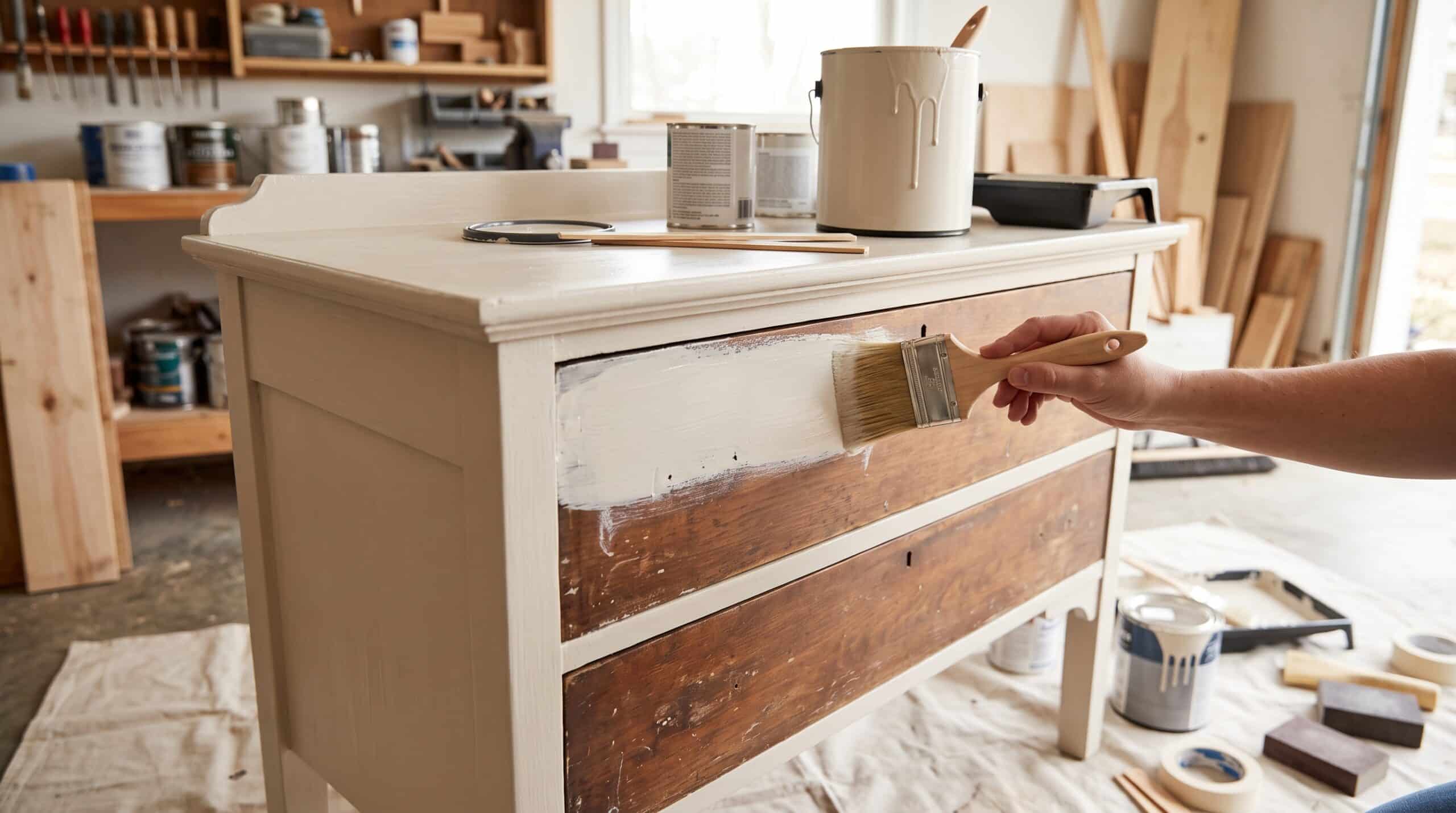
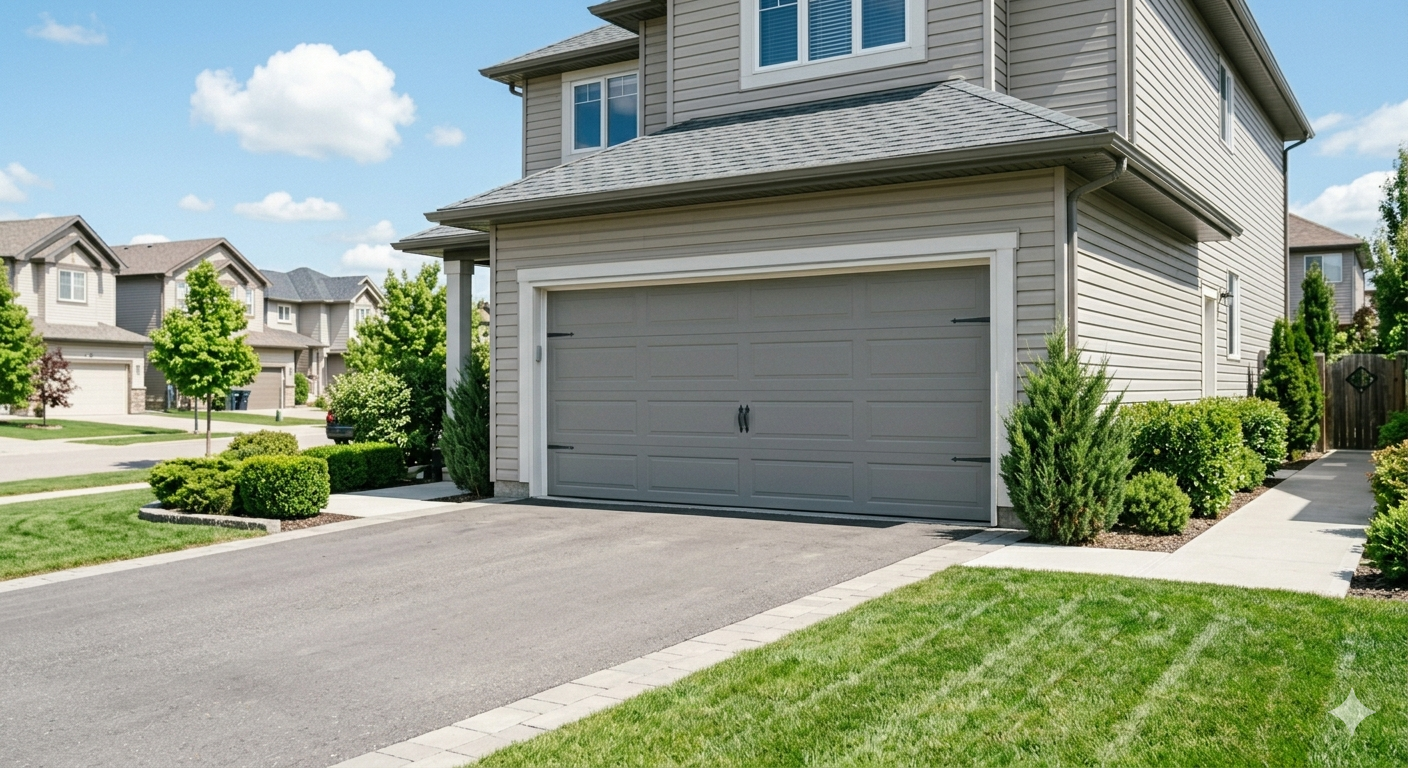
Painting a garage door is one of the easiest ways to refresh your home’s curb appeal and protect the door from weather damage. The process works best when you clean the surface, sand it lightly, apply a primer, and follow up with two coats of exterior-grade paint suited to your door’s material.
Whether your door is steel, wood, or fibreglass, the right preparation and paint type make a significant difference in how long the finish lasts. Most homeowners can complete the job over a weekend with the proper tools and a bit of patience. A well-done paint job can hold up for five to seven years before needing a refresh, especially when quality materials are used from the start.
How Do You Paint a Garage Door?
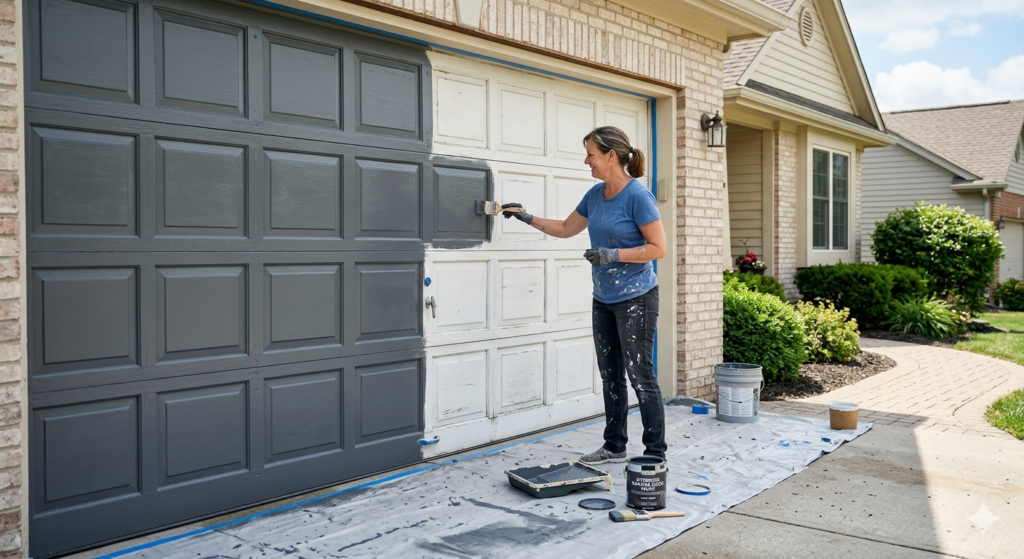
Painting a garage door follows a straightforward process, but skipping steps often leads to peeling, bubbling, or uneven colour. Here is how to do it the right way from start to finish.
Step 1: Clean the Surface. Wash the door with soapy water and a stiff brush to remove dirt and grease. Let it dry fully. Applying paint on a damp surface will cause it to lift early.
Step 2: Sand and Scrape. If the existing paint is peeling, scrape it off and sand the area smooth. For a steel door, light sanding with 80 to 120 grit sandpaper helps primer bond properly.
Step 3: Tape and Cover. Mask off hardware, windows, and surrounding trim with painter’s tape. Lay drop cloths on the driveway below.
Step 4: Apply Primer. Use a primer suited to your door’s material. Rust-inhibiting primer works well on steel. Let it cure before painting a garage door with the topcoat.
Step 5: Paint. Apply two thin, even coats of exterior paint. Let the first coat dry fully before the second. Thin coats prevent drips and look more professional.
Step 6: Cure. After painting a garage door, wait at least 24 hours before operating it to avoid scratching the fresh finish.
What Paint Works Best for Painting a Garage Door?
Not all paints are equal, and choosing the wrong type is a common mistake when painting a garage door. The material of your door determines which paint will hold up the longest.
Paint Types by Door Material
- Steel doors: Use 100% acrylic latex exterior paint. It is flexible, resists rust, and handles temperature swings.
- Wood doors: Acrylic latex or oil-based paint both work. Acrylic latex dries faster and cleans up with water.
- Fibreglass doors: Acrylic latex exterior paint is the top choice. It adheres without cracking.
- Aluminum doors: Use a self-etching primer followed by acrylic latex for the best bond.
When painting a garage door in a Canadian climate like Winnipeg, pick a paint rated for temperature extremes. Satin and semi-gloss finishes are popular for painting a garage door because they are easy to wipe clean and resist scuffs better than flat finishes.
| Door Material | Best Paint Type | Recommended Finish |
| Steel | Acrylic Latex Exterior | Semi-Gloss or Satin |
| Wood | Acrylic Latex or Oil-Based | Satin or Semi-Gloss |
| Fibreglass | Acrylic Latex Exterior | Satin |
| Aluminum | Acrylic Latex (with self-etching primer) | Semi-Gloss |
Should You Roll or Spray When Painting a Garage Door?
Both methods work, and the right choice depends on your door’s texture, skill level, and the tools you have on hand.
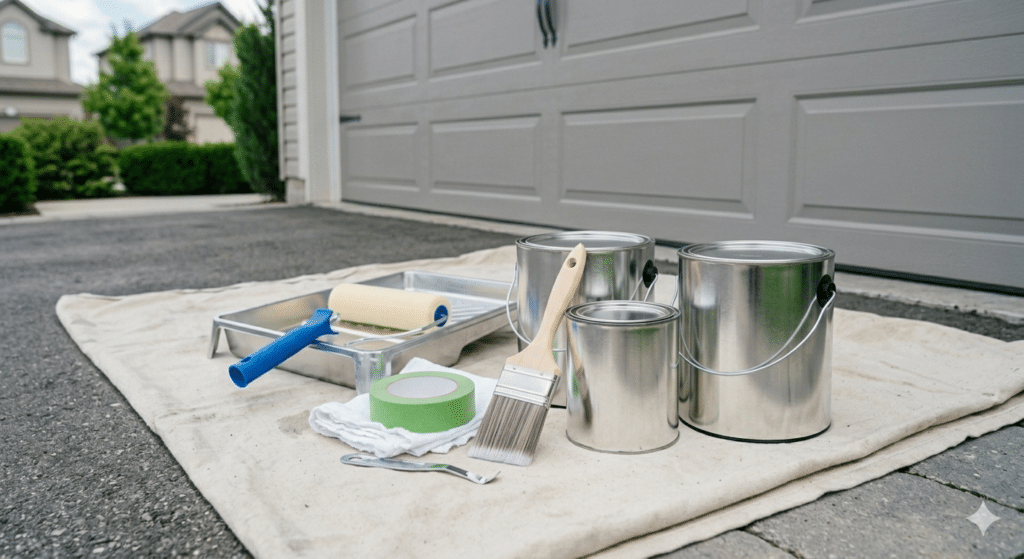
Rolling: A foam roller is the most common approach for painting a garage door at home. It delivers even coverage with no overspray risk and works well on flat or slightly textured steel doors. Use a 4-inch foam roller for panels and a brush for tight corners.
Spraying: An airless sprayer gives the smoothest finish, especially on raised-panel or textured doors. It requires more masking preparation and more skill to avoid uneven coverage or runs.
Brushing: A brush alone works for touch-ups or detail areas but tends to leave stroke marks across large flat surfaces.
For most homeowners, rolling is the safer and more forgiving choice when painting a garage door. For a truly professional finish, consider contacting the exterior painting specialists at True Coat for a free estimate.
Things to Know Before Painting a Garage Door
A few practical details can save you time and money before you start.
- Choose the right day. Painting a garage door in temperatures below 10 degrees Celsius or above 32 degrees Celsius affects how paint bonds. Aim for a dry, mild day.
- Never skip primer. It seals the surface and gives the topcoat something to grip. Skipping primer almost always leads to early peeling on a garage door.
- Two thin coats beat one thick coat. Thick coats drip and take longer to dry. Two even coats give a more durable result.
- Sheen matters. Semi-gloss and satin resist moisture and clean easily, making them the most practical choices for painting a garage door.
- Give it time to cure. Paint feels dry within hours but takes up to 72 hours to fully cure. Keep the door open during that window to avoid sticking.
- Strip old peeling paint fully. If the existing finish is bubbling or lifting, removing it back to the bare surface gives painting a garage door a much longer lifespan.
| Surface Condition | What to Do |
| Mild surface dirt | Clean with soapy water, let dry, then paint |
| Peeling or flaking paint | Scrape, sand down, prime, then paint |
| Rust spots on steel door | Sand off rust, apply rust-inhibiting primer, then paint |
| Bare wood surface | Sand smooth, apply wood primer, then paint |
| Previously painted, good shape | Light sand, clean, prime lightly, then repaint |
How Long Does a Paint Job Last on a Garage Door?
When painting a garage door is done properly with good materials, the finish typically lasts five to seven years before showing signs of wear.
Winnipeg’s harsh winters, UV exposure, and freeze-thaw cycles put extra stress on exterior surfaces. Using high-quality acrylic latex exterior paint with a proper primer coat gives the finish the best chance at longevity. Lighter shades tend to outlast darker ones on south-facing doors because dark colours absorb more heat, causing the paint to expand and contract faster over time.
Washing the door once or twice a year removes grime and road salt that can break down the paint surface. Touching up chips quickly stops moisture from getting underneath and starting larger peeling.
If your door’s paint is near the end of its life, reading about how to choose the best house exterior painters can help you decide whether to repaint or replace
Get Help With Painting a Garage Door in Winnipeg
True Coat is a licensed and fully insured painting and decorating company based in Winnipeg, Manitoba. Their team handles both residential and commercial projects with quality materials, transparent pricing, and a 3-year craftsmanship warranty. If painting a garage door feels like more than you want to tackle yourself, True Coat offers free estimates to get you started. Explore their completed work on the True Coat projects page to see real examples of their exterior painting results.
More Exterior and Residential Painting Tips
There is more to a home exterior refresh than painting a garage door alone. If you are planning a bigger project, reading about the best approach to exterior painting for house projects is a great place to start. You can also browse residential painting in Winnipeg to learn what homeowners in Winnipeg should know about year-round exterior care.
This project pays off in both appearance and long-term protection. The key steps are consistent: clean the surface thoroughly, remove any problem areas, apply the right primer, and use two thin coats of exterior-grade acrylic latex paint.
Getting the sheen right, timing the project for suitable weather, and letting the paint cure fully are the details that separate a finish that lasts from one that fails early. Whether you go the DIY route or call in a professional, quality preparation and the right materials are always the most important investment in painting a garage door.
Frequently Asked Questions About Painting a Garage Door
Is it a good idea to paint a garage door?
Yes, painting a garage door is a cost-effective way to improve curb appeal and protect the surface from weather damage. A fresh coat seals out moisture, prevents rust on steel doors, and gives your home a cleaner look. It costs far less than replacing the door entirely and delivers strong results when done with proper prep and quality materials.
What kind of paint do you use on a garage door?
Use 100% acrylic latex exterior paint for most garage doors. It handles temperature changes well, resists moisture, and comes in a wide range of colours. Pair it with a rust-inhibiting primer for metal and a wood primer for timber surfaces. Satin or semi-gloss finishes are the most practical choice for a garage door.
Can I paint over my garage door?
Yes, you can paint over an existing finish as long as the surface is clean and well-adhered. Clean the door, sand lightly to improve bonding, apply primer, then repaint. If the old paint is peeling or bubbling, remove it fully before painting a garage door with new colour for a lasting result.
Is it better to roll or spray paint a garage door?
Both work well, but rolling is the better option for most homeowners. A foam roller is easy to control and leaves even coverage with no overspray. Spraying gives a polished finish but demands more prep and practice. Rolling is the most forgiving method for anyone painting a garage door for the first time.
How long will a painted garage door last?
A properly finished garage door typically lasts five to seven years. The lifespan depends on paint quality, surface prep, and climate exposure. In Winnipeg, using a quality acrylic latex exterior paint with proper primer and touching up chips promptly helps the finish stay strong for as long as possible.