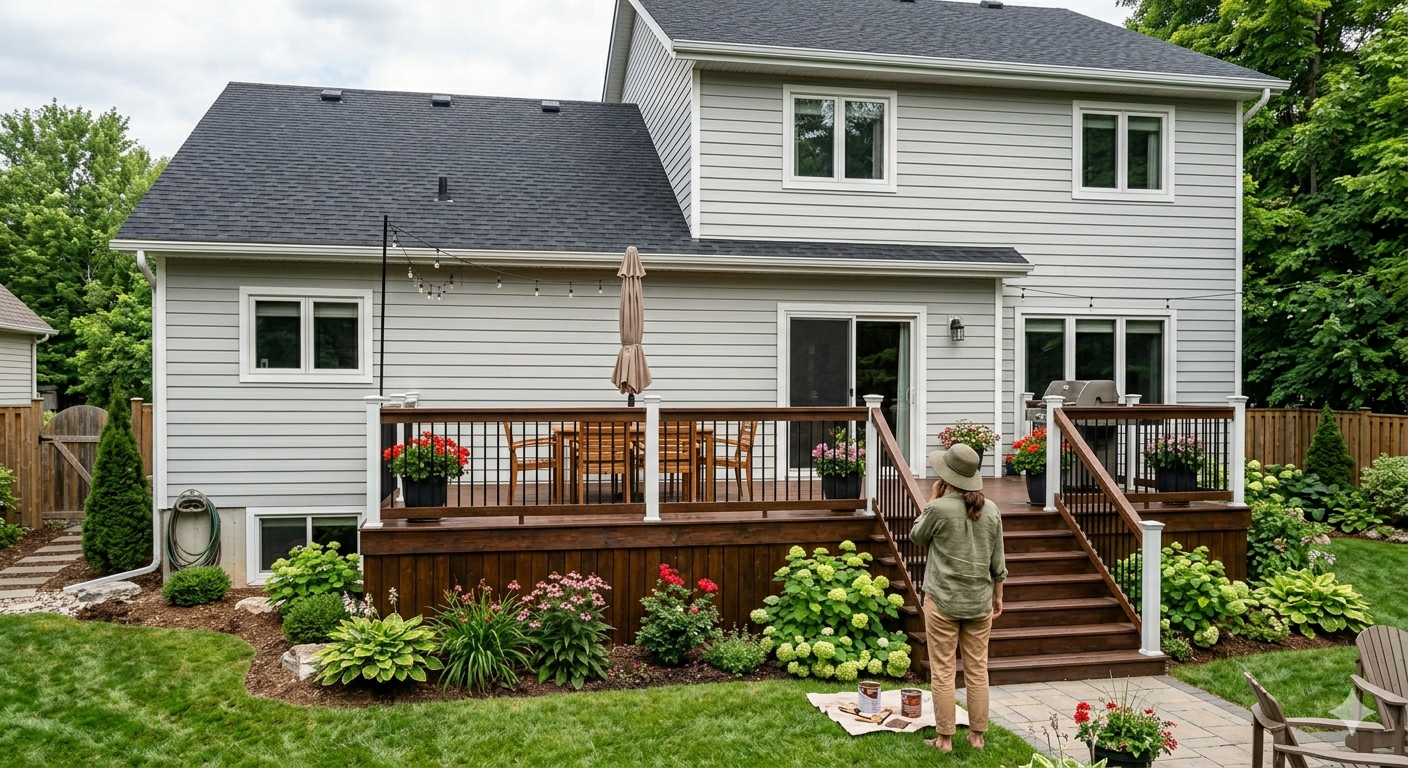
Deck staining colors play a major role in how your home looks from the outside and how long your deck stays protected. The best deck staining colors for most Canadian homes are medium to dark browns like walnut, espresso, and cedar tones, as these shades hide weathering well, pair with a wide range of exterior finishes, and hold up against seasonal temperature swings.
Whether you want your deck to blend with your home or stand out as a feature, the right deck staining color depends on your siding, the wood type, how much sun the deck gets, and the finish you choose. This post covers the top color options, how to match your house exterior, which shades last the longest, and practical tips on applying stain over old coats.
What Are the Most Popular Deck Staining Colors?
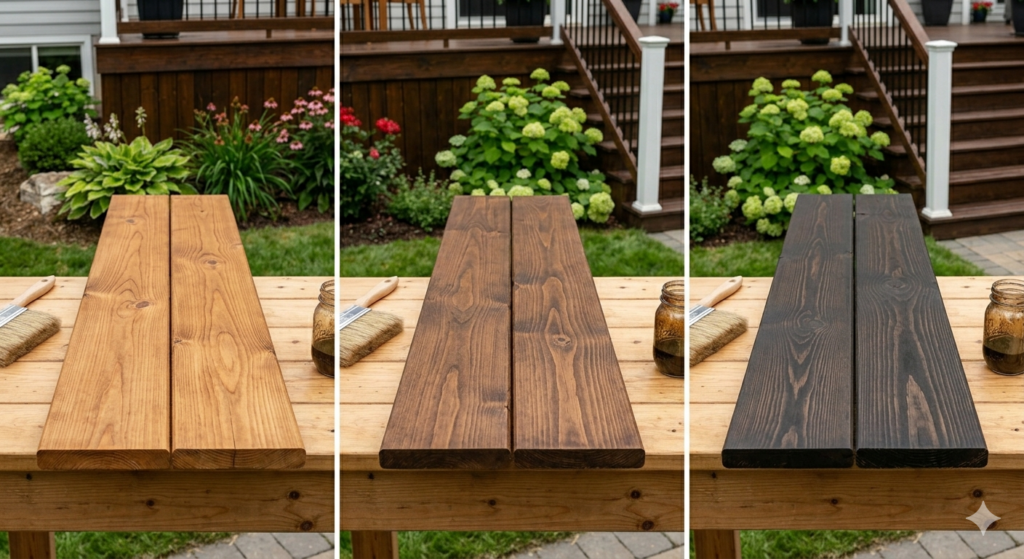
When it comes to deck staining colors, most homeowners lean toward tones that bring out the warmth and texture of real wood. Natural hues like cedar, honey, and medium brown remain the most requested deck staining colors year after year because they feel inviting, complement most home styles, and age gracefully with the wood. Cooler options like driftwood grey have also grown in popularity, especially for modern or farmhouse-style homes.
Here is a breakdown of the most common deck staining colors and where they work best:
| Deck Staining Color | Best For | Finish Look | Durability |
| Natural Cedar / Honey | Wood grain fans, warm tones | Semi-transparent | 3-5 years |
| Medium Brown / Walnut | Classic homes, most siding types | Semi-solid or solid | 5-7 years |
| Driftwood / Silver Grey | Modern, coastal, or farmhouse style | Semi-transparent | 3-5 years |
| Dark Espresso / Black | Bold contrast, modern aesthetics | Solid | 5-8 years |
| Redwood / Mahogany | Traditional or craftsman homes | Semi-transparent to solid | 4-6 years |
For most homes in Winnipeg and across Canada, semi-transparent deck staining colors in the cedar or walnut range offer the best balance of visual appeal and wood protection. They let the grain show through while shielding the surface from UV rays, moisture, and freeze-thaw cycles.
If you want deck staining colors with less maintenance over time, a solid stain in espresso or dark brown tends to cover grain imperfections and needs fewer touch-up coats compared to lighter semi-transparent options. You can also explore professional deck staining services to get the right color and finish applied properly the first time.
What Color Stain Is Best for Decks?
The best deck staining color depends on the condition of your wood, your home’s exterior palette, and your personal style. That said, medium brown deck staining colors are the most versatile choice for the widest range of homes. Shades like walnut, chestnut, and teak work with brick, vinyl, hardie board, and painted siding while keeping the wood looking rich and polished.
Top Deck Staining Color Choices and Why They Work
- Cedar or Honey Brown: Brings out the natural warmth of new or lightly weathered wood. Works best for lighter siding and a traditional look.
- Walnut or Chestnut: One of the most popular deck staining colors. Earthy, rich, and compatible with a huge range of home exteriors.
- Driftwood or Weathered Grey: A modern, low-contrast choice that suits coastal, contemporary, and farmhouse homes with grey or white siding.
- Espresso or Dark Brown: Bold deck staining colors that create strong visual contrast and hide grain wear. Best for homes with a modern or dramatic exterior.
- Redwood or Mahogany: Rich, reddish-brown tones that suit craftsman or traditionally styled homes. These deck staining colors age beautifully with quality maintenance.
Choosing a deck staining color in the medium-to-dark range also offers a practical benefit: these tones absorb and retain heat in cooler seasons, which can extend how long the surface feels comfortable underfoot in spring and fall.
For guidance picking a color that suits your specific deck and home, reach out to True Coat for a free consultation. True Coat is a licensed, fully insured painting company in Winnipeg offering deck staining and exterior painting services with a 3-year craftsmanship warranty.
Should a Deck Be Lighter or Darker Than the House?
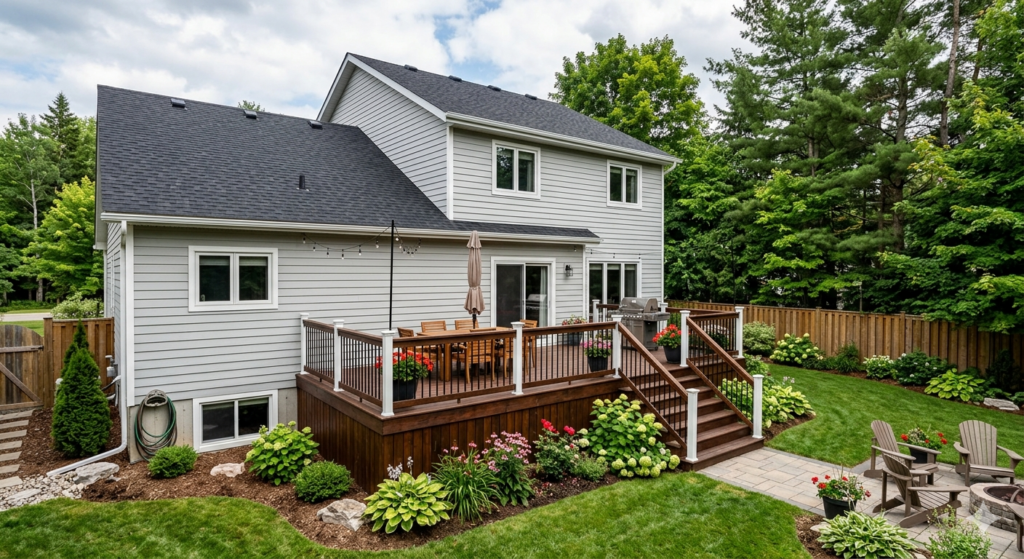
A common question homeowners ask when choosing deck staining colors is whether to go lighter or darker than the house exterior. The short answer: your deck should generally be one to two shades darker than your home’s main exterior color. This creates a grounded, layered look that feels intentional without being jarring.
A lighter deck can look washed out, especially on homes with dark siding, and it tends to show dirt, mildew, and weathering more quickly. Darker deck staining colors naturally hide discoloration between cleaning sessions and create a stronger visual base for the structure of the home.
Here is a simple reference for pairing deck staining colors with exterior finishes:
| House Exterior Color | Recommended Deck Staining Color |
| White or Cream Siding | Natural Cedar, Honey Brown, or Warm Walnut |
| Grey or Stone Siding | Driftwood, Charcoal, or Weathered Grey |
| Red Brick Exterior | Redwood, Dark Brown, or Espresso |
| Dark Navy or Black Siding | Light Driftwood or Natural Wood Tones |
| Beige or Tan Siding | Medium Brown, Mahogany, or Chestnut |
The exception is all-white or very light-coloured homes, where using a natural cedar or honey deck staining color provides enough contrast to define the deck space without looking too heavy. If your siding is already a deep colour like navy or hunter green, a lighter or neutral driftwood tone prevents the deck from visually competing with the walls.
You can also check exterior painting projects by True Coat for real examples of how deck staining colors are matched to different home exteriors.
What Deck Staining Color Lasts the Longest?
When longevity is the priority, darker and more opaque deck staining colors generally outperform lighter semi-transparent options. Solid deck staining colors in deep brown, espresso, or dark walnut tones offer the best protection because the higher concentration of pigment creates a thicker barrier against UV rays, moisture, and foot traffic.
Semi-transparent deck staining colors allow more UV light to reach the wood, which means they fade faster and require reapplication every two to three years in harsh climates. In contrast, solid deck staining colors can hold up for five to eight years before needing a full recoat, depending on sun exposure and how well the surface was prepared before application.
Practical tips for extending the life of any deck staining color:
- Clean the deck before staining using a deck wash and let it dry fully for at least 48 hours.
- Apply two thin coats of stain rather than one thick coat. This improves adhesion and prevents peeling.
- Use a penetrating oil-based stain for older wood as it soaks into the fibres and resists cracking better than surface coatings.
- Re-apply a maintenance coat every two to three years on high-traffic areas like stairs and railings, even if the full deck does not need it.
- Choose a deck staining color that matches the sheen level to the wood type. Smooth, tight-grain wood takes solid stains better; rougher wood absorbs penetrating stains more evenly.
For decks exposed to Winnipeg winters, oil-based or alkyd deck staining colors hold up better through freeze-thaw cycles compared to some water-based formulas. Talking to a professional can help you match the right product to your wood species and the local climate. You can also read about the best approach to exterior painting for house projects for broader guidance on exterior surface preparation and product selection.
How to Choose Deck Staining Colors That Match Your Home
Picking the right deck staining colors is not just about personal preference. It involves reading how light hits the deck, what the natural wood grain looks like, and how the color interacts with your siding, trim, and roof line. The right deck staining color ties all of these elements together into a cohesive exterior.
Tips for Choosing the Right Deck Staining Color
- Test before you commit: Apply a small patch of two or three deck staining colors on an inconspicuous area of your deck. Check how each one looks in the morning light, afternoon sun, and overcast conditions before making a final decision.
- Match the undertone: Wood has natural red, orange, or yellow undertones. Choosing deck staining colors with matching undertones creates harmony. A walnut stain on cedar wood, for example, enhances the warm orange tones naturally present in the grain.
- Consider the finish level: Semi-transparent deck staining colors show the grain, semi-solid options mute it slightly, and solid stains cover it completely. The more worn or inconsistent the wood, the more coverage you typically need.
- Look at the whole picture: Step back and look at your home from the street before finalizing deck staining colors. The deck should feel like part of the overall design, not a separate element dropped into the yard.
- Factor in the wood age: Newer wood benefits from lighter semi-transparent deck staining colors that let the fresh grain shine. Older, greyed wood typically needs a semi-solid or solid deck staining color to restore a clean appearance.
It also helps to consult with an experienced painter who works with deck staining colors regularly. A color that looks perfect on a sample card may read differently once it covers a large outdoor surface. For a personalized recommendation and free estimate, get in touch with True Coat’s team.
Things To Know About Deck Staining Colors
- Oil vs. water-based stains: Oil-based deck staining colors penetrate deeper into the wood and tend to last longer. Water-based options dry faster, have less odor, and are easier to clean up, but may need more frequent reapplication.
- Grey tones require more maintenance: Driftwood and weathered grey deck staining colors look stunning but tend to show green algae and mildew more easily in humid conditions. Plan for annual cleaning if you choose these tones.
- Lighter deck staining colors show dirt faster: For high-traffic family decks, darker deck staining colors simply require less frequent cleaning than lighter honey or whitewash options.
- The same stain looks different on different wood species: Cedar absorbs colour differently than pressure-treated pine. Always test your deck staining color on a scrap piece of your specific wood type before full application.
- Solid stains are harder to remove later: If you ever want to switch back to a semi-transparent look, solid deck staining colors require significant sanding or stripping. Keep this in mind if you value flexibility in future updates.
- Stain and sealant combos save time: Many modern deck staining colors come with built-in UV blockers and water repellents. These combination products simplify application and extend the time between maintenance coats.
You can learn more about related exterior projects and how staining fits into a broader home refresh by reading about siding and stucco painting services, which often pairs well with a fresh deck staining color upgrade.
Why True Coat Is the Right Choice for Deck Staining in Winnipeg
True Coat is a licensed and fully insured painting company serving Winnipeg and surrounding communities. With years of hands-on experience applying deck staining colors to residential and commercial properties, the team brings real expertise to every project, from color selection to surface prep and final coat application. True Coat offers competitive pricing, free estimates, and a 3-year craftsmanship warranty on all completed work.
Whether you are updating a single deck or refreshing the entire exterior of your home, True Coat provides a reliable, professional service that gets the job done right. Contact True Coat today for a free, no-obligation estimate and let the team help you find the perfect deck staining color for your home.
You can also explore financing options to make your deck staining project more manageable.
Making the Final Call on Deck Staining Colors
The best deck staining colors are the ones that complement your home, hold up to your local climate, and match the practical demands of your outdoor space. Medium-to-dark browns remain the go-to choice for most Canadian homeowners because they are forgiving, durable, and versatile.
Whether you lean toward a warm cedar tone, a bold espresso, or a modern driftwood grey, the key is proper prep, the right stain formula, and consistent maintenance. Take the time to test your top two or three deck staining colors on the actual wood before committing, and work with a professional if you want lasting results without the guesswork.
Frequently Asked Questions About Deck Staining Colors
What color stain is best for decks?
Medium brown deck staining colors like walnut, cedar, or chestnut are the best all-around choice for most homes.
These deck staining colors complement a wide range of exterior finishes, show natural wood grain well, and hold up to regular foot traffic and seasonal weather changes. They are also widely available in both semi-transparent and solid formulas.
What is the most popular color for a deck?
Natural cedar and medium walnut brown are consistently the most popular deck staining colors across Canada.
These tones strike a balance between warmth and durability. Cedar deck staining colors work well for newer wood, while walnut is a reliable choice for older or refinished decks where the grain has started to silver or grey.
Should a deck be lighter or darker than the house?
Your deck staining color should generally be one to two shades darker than your home’s main exterior.
This creates a grounded, layered look that feels cohesive. A darker deck staining color also hides weathering and dirt more effectively between maintenance sessions.
What deck stain color lasts the longest?
Darker, solid deck staining colors in espresso or deep brown last the longest, often five to eight years before a full recoat is needed.
Higher pigment content in solid deck staining colors creates a thicker barrier against UV exposure and moisture. Semi-transparent deck staining colors are beautiful but require more frequent reapplication, typically every two to three years in colder climates.
Can I stain over old stains without sanding?
It depends on the current stain condition and what type of deck staining color you plan to use next.
If the old stain is still well-bonded and you are applying a similar or darker deck staining color, a thorough clean and light scuff may be enough. However, if the existing stain is peeling, flaking, or you want to apply a semi-transparent deck staining color over a solid one, sanding or stripping is necessary for proper adhesion and an even finish. Applying a new deck staining color over failing old stain will trap moisture and lead to premature peeling.