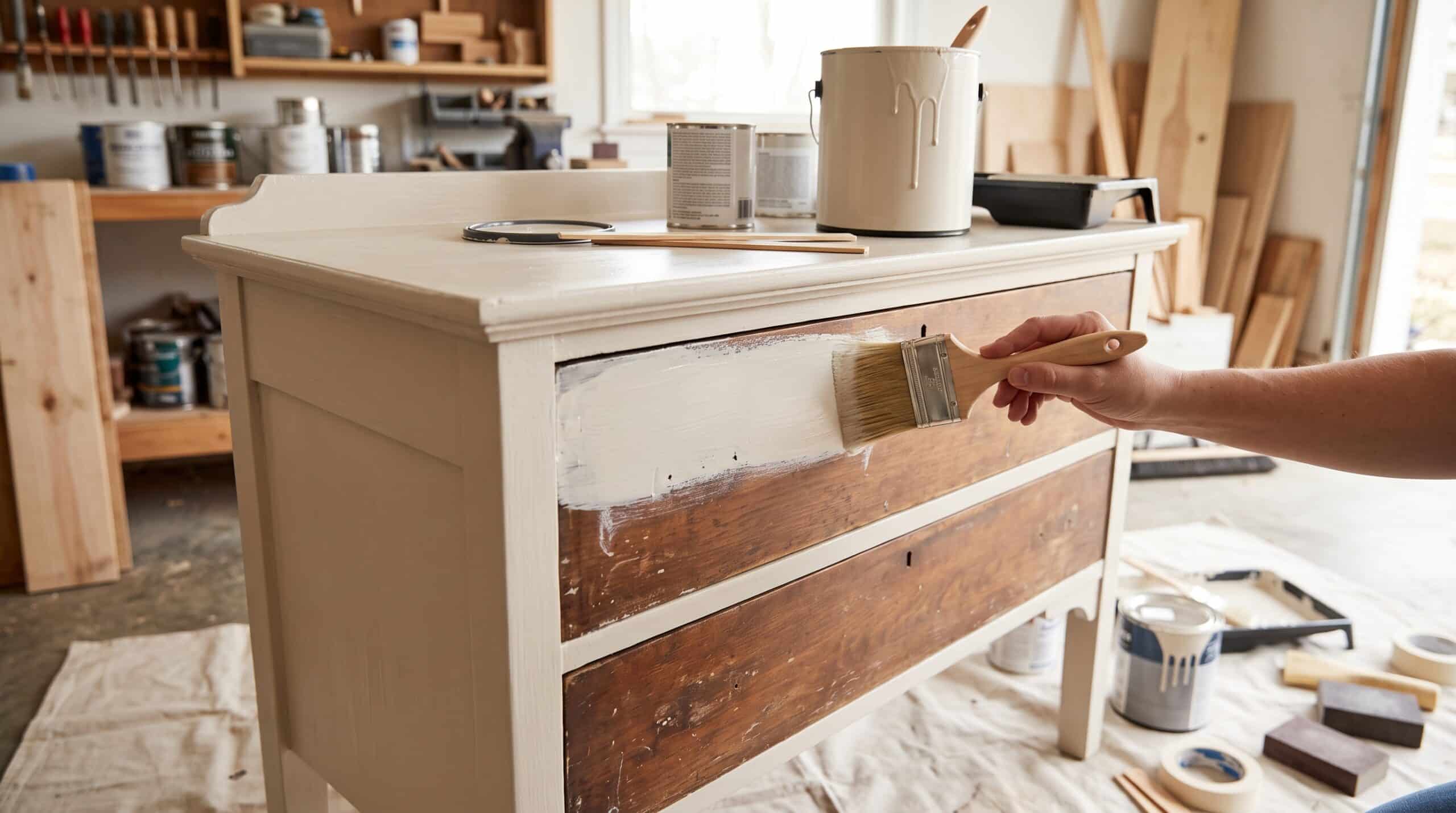
To paint cabin surfaces correctly, you need to clean and prepare the wood, choose the right paint type for the climate, and apply at least two coats with proper drying time in between.
Whether you are working on the interior or exterior of a log cabin, the results depend on choosing the right products and following the right steps.
This covers the best paints to use, how to prep surfaces, common mistakes to avoid, the difference between interior and exterior cabin painting, and when to call in a professional.
What Does It Mean to Paint a Cabin?
Painting a cabin is different from painting a typical house. Cabins are often built with exposed logs, rough-sawn wood, or natural timber, which require specific products and methods that differ from standard drywall or stucco surfaces.
When you paint cabin walls, you are protecting the wood from moisture, UV rays, insects, and seasonal temperature changes. In a place like Winnipeg, where winters are harsh and summers can be humid, the right cabin paint does more than just add colour. It extends the life of the wood and keeps the structure sealed against the elements.
Many homeowners also paint cabin interiors to add character, brighten dark wood tones, or match a modern design style. For interior work, the focus shifts to air quality and finish quality rather than weatherproofing. If you want to explore what professional residential painting in Winnipeg looks like for unique properties like cabins, it is worth understanding what goes into the process.
How to Paint Cabin Exterior Surfaces
Exterior cabin painting requires more preparation than interior work. Wood expands and contracts with the seasons, so the paint you use needs to be flexible and breathable enough to move with it.
Step 1: Clean the Surface
Wash the exterior thoroughly to remove dirt, mildew, and old peeling paint. A pressure washer works well for log cabins, but keep it on a lower setting to avoid damaging the wood grain. Let the surface dry completely before moving forward, which usually takes 24 to 48 hours depending on the weather.
Step 2: Sand and Repair
Sand down any rough patches or raised grain. Fill cracks and gaps with a flexible exterior wood filler or caulking that is rated for wood movement. This step is critical because skipping it leads to peeling paint within a season or two.
Step 3: Apply Primer
Use a penetrating oil-based primer on bare wood before you paint cabin exteriors. This seals the wood and helps the topcoat bond properly. Skip the primer and the paint will not last, especially in areas exposed to rain, snow, or direct sunlight.
Step 4: Apply Paint in Thin Coats
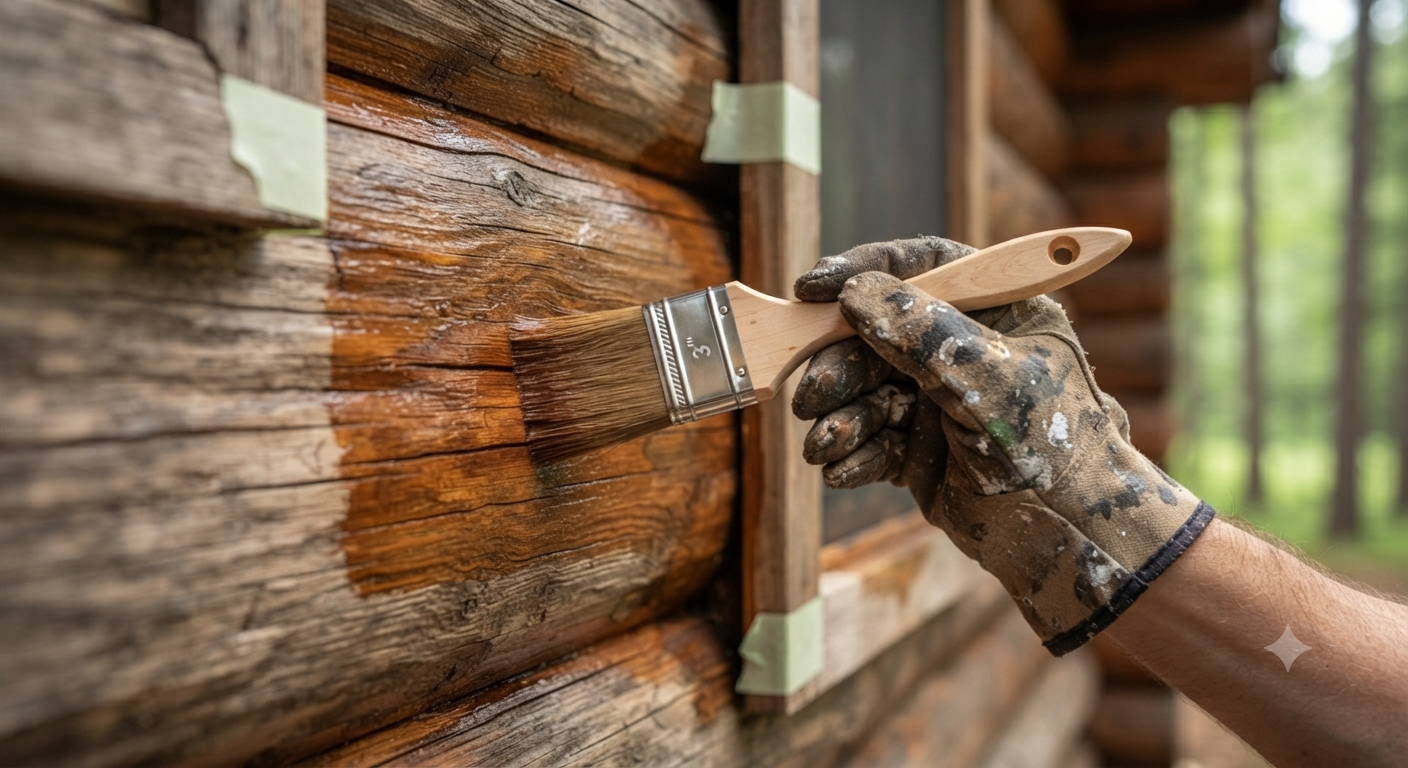
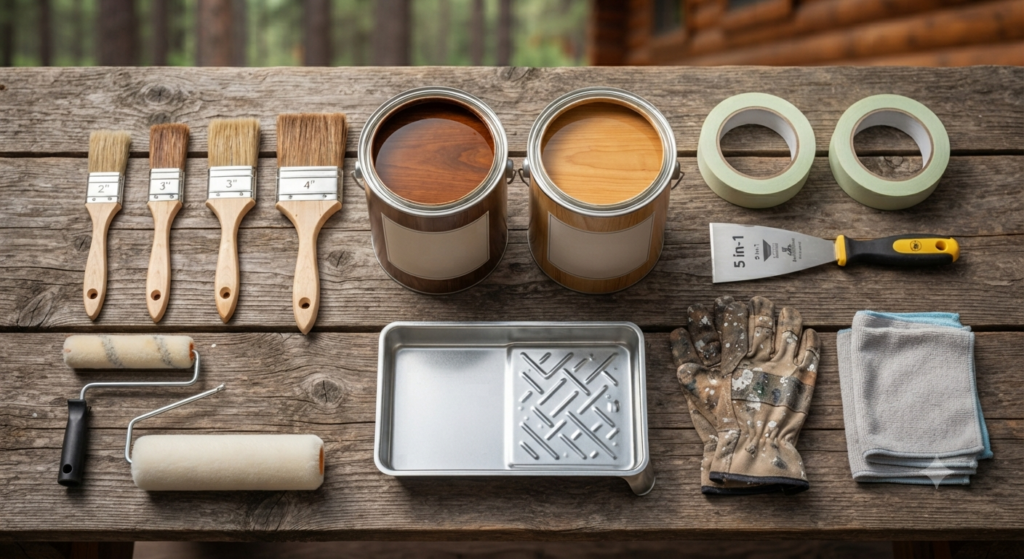
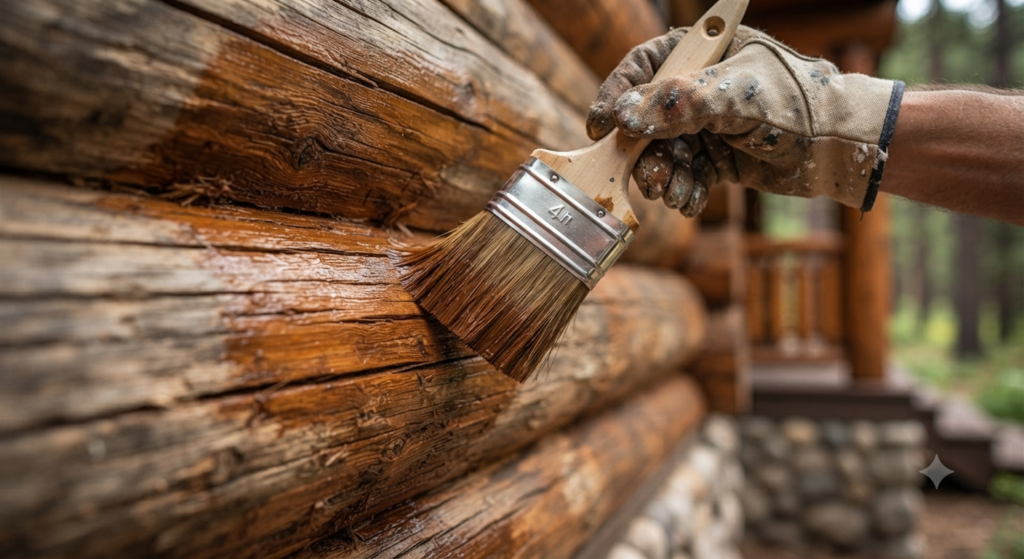
Use a brush or roller designed for rough surfaces. Apply the first coat in a thin, even layer and allow it to dry fully. Sand lightly between coats, then apply a second coat. For full log cabins, a brush gives better penetration into the wood than a roller or sprayer.
How to Paint Cabin Interiors
Interior cabin painting is less about weatherproofing and more about aesthetics and air quality. Many people choose to keep the natural wood look inside, but painting interior walls, ceilings, or trim can make a space feel brighter and more modern.
Before you paint cabin interiors, clean the walls to remove grease, dust, or smoke residue, especially if the cabin has a wood-burning fireplace. Use a bonding primer if you are painting over bare wood, knotty pine, or cedar, since these woods contain tannins that bleed through regular primer.
For colour selection, lighter shades open up the space, while warm neutrals enhance the natural cabin feel. Low-VOC paints are a good choice for enclosed spaces where ventilation may be limited. If you are unsure about finishes, best interior painting companies can guide you through the right options for wood surfaces.
Use a satin or semi-gloss finish in high-traffic areas like kitchens and bathrooms, as these are easier to clean. Flat or eggshell finishes work well in bedrooms or living areas where you want a softer appearance.
Best Paint Types for a Cabin
Choosing the right paint is one of the most important decisions when you paint cabin surfaces. Not all paints perform the same way on wood, and using the wrong type leads to cracking, peeling, and early wear.
| Paint Type | Best Used For | Key Benefit |
| Acrylic Latex | Exterior walls, siding | Flexible, water-resistant, easy cleanup |
| Oil-Based | Trim, railings, doors | Hard finish, high durability |
| Log and Timber Stain | Full log exteriors | Penetrates deep, shows wood grain |
| Low-VOC Acrylic | Interior walls and ceilings | Safer air quality in enclosed spaces |
| Deck Paint or Stain | Cabin porches and decks | Slip-resistant, moisture-proof |
For most exterior cabin surfaces in Canada, a high-quality acrylic latex paint or a penetrating log stain gives the best results. These products handle freeze-thaw cycles well and resist moisture without sealing the wood so tightly that it traps humidity inside.
If you want a unique finish, limewash paint in Canada is an option worth considering for interior feature walls. It creates a soft, textured look that pairs well with the natural feel of a cabin.
Things To Know Before You Paint a Cabin
There are a few important things to keep in mind before starting any cabin painting project, whether it is big or small.
- Wood must be completely dry before painting. Moisture trapped under paint causes bubbling and peeling faster than almost anything else.
- Temperature matters. Most exterior paints should not be applied below 10 degrees Celsius. Plan your project for spring or early fall in Manitoba.
- Old stain or paint affects adhesion. If the surface has an existing oil-based stain, you may need to strip it before applying a new latex product.
- Log cabins need re-sealing more often than standard painted homes. Expect to re-apply every 3 to 5 years on the exterior depending on sun and moisture exposure.
- Colour choice affects heat absorption. Darker colours absorb more heat, which can dry out and crack wood faster in sunny areas. Lighter tones are gentler on the wood long-term.
- Using the wrong primer is a common and costly mistake. Always match your primer to the paint type and the wood species you are working with.
Exterior vs Interior Cabin Painting Compared
Knowing the differences between exterior and interior cabin painting helps you plan the right approach for each area.
| Factor | Exterior Cabin | Interior Cabin |
| Main goal | Weatherproofing and protection | Aesthetics and air quality |
| Paint type | Acrylic latex or log stain | Low-VOC acrylic or oil-based |
| Primer needed? | Always, especially on bare wood | Yes, especially over knots and tannins |
| Coats required | 2 to 3 coats minimum | 2 coats standard |
| Reapplication | Every 3 to 5 years | Every 5 to 10 years |
| Drying conditions | Weather-dependent, above 10C | Ventilate the space well |
When to Hire a Professional to Paint a Cabin
Some cabin painting projects are manageable on your own. But others are better handled by a professional, especially when the structure is large, the surface has significant damage, or the work needs to last through tough Canadian winters.
Hiring a professional makes sense when the cabin has multiple storeys, extensive log work, or deep cracks that need proper filling before paint goes on. Professionals also have access to commercial-grade products and know how to handle tannin bleed, weathered wood, and tricky surface conditions that trip up DIY attempts.
True Coat is a licensed and insured painting company based in Winnipeg, Manitoba. Whether you need help to paint cabin interiors, exteriors, or specialty surfaces, their team brings the skill and materials to get it done right. Contact True Coat for a free estimate.
Your Next Steps to Paint a Cabin Right
Painting a cabin is a rewarding project when you approach it with the right plan. Start with thorough prep, choose products rated for wood and your local climate, and apply paint in thin, even coats. Whether you tackle the work yourself or bring in help, the key is not rushing the process.
For homeowners in Winnipeg and surrounding areas, getting a professional assessment before you paint cabin surfaces can save you time and money in the long run. Explore exterior painting services to see what a proper cabin painting job looks like from start to finish.
Frequently Asked Questions
What is the best paint to use on a cabin?
For exteriors, acrylic latex paint or a penetrating log stain works best. These products are flexible enough to handle wood movement and hold up well against Canadian weather. For interiors, use a low-VOC acrylic in the finish that suits the room.
How often should you paint cabin exteriors?
Most cabin exteriors need repainting or re-sealing every 3 to 5 years. Factors like sun exposure, moisture, and the quality of the previous paint job all affect how long the finish lasts. Log cabins may need more frequent attention than sided cabins.
Do you need to prime before you paint cabin wood?
Yes, priming is essential, especially on bare or weathered wood. A penetrating primer helps the topcoat bond properly and prevents early peeling. For interior wood with knots, use a shellac-based primer to stop tannin bleed.
Can you paint cabin logs instead of staining them?
Yes, you can paint cabin logs, but staining is often the better choice. Stain penetrates the wood rather than sitting on top of it, which means it does not peel the same way paint can. Paint works well on flat siding and trim, but log surfaces generally hold stain better over time.
What colour works best when you paint cabin exteriors?
Warm earth tones like brown, tan, olive, and dark green are popular and practical. These colours blend with natural surroundings and show less wear between paint jobs. Lighter tones work well on interiors to brighten the space without losing the cabin feel.