Professional drywall installation and repair creates the foundation for beautiful, long-lasting walls in any home or commercial space. Hiring skilled contractors ensures proper techniques, smooth finishes, and results that stand the test of time. Throughout Winnipeg, property owners trust experienced teams to handle everything from new installations to patching and skim coating. A well-finished wall sets the stage for stunning paint applications, and working with experts eliminates the frustration of visible seams, cracks, or uneven surfaces. True Coat provides comprehensive drywall and plaster repair services that transform damaged or outdated walls into pristine canvases. From residential renovations to commercial build-outs, professional drywall work remains an investment that pays dividends in both aesthetics and property value.
What Makes Professional Drywall Different from DIY
The gap between amateur and professional drywall work becomes obvious the moment paint hits the surface. Trained installers understand how humidity, temperature, and substrate conditions affect joint compound performance. They select appropriate drywall thicknesses for different applications, whether that means fire-rated panels for garages or moisture-resistant boards for bathrooms.
Professionals bring specialized tools that most homeowners simply do not own. Automatic taping tools, stilts for ceiling work, and commercial-grade sanders create efficiency and precision that hand tools cannot match. The learning curve for these tools spans years, not weekends.
| DIY Drywall Approach | Professional Drywall Approach |
| Basic hand tools | Automatic taping banjos and flat boxes |
| Single coat of mud | Multiple coats with proper drying time |
| Visible seams after painting | Seamless, invisible joints |
| Weekend project timeline | Efficient, scheduled completion |
| Trial and error techniques | Proven methods and expertise |
When you choose the right painters in Winnipeg, they often identify drywall issues that need addressing before paint application. Bumps, ridges, and poorly finished corners become magnified under fresh coats of color.
The Professional Name for Drywall and Industry Terms
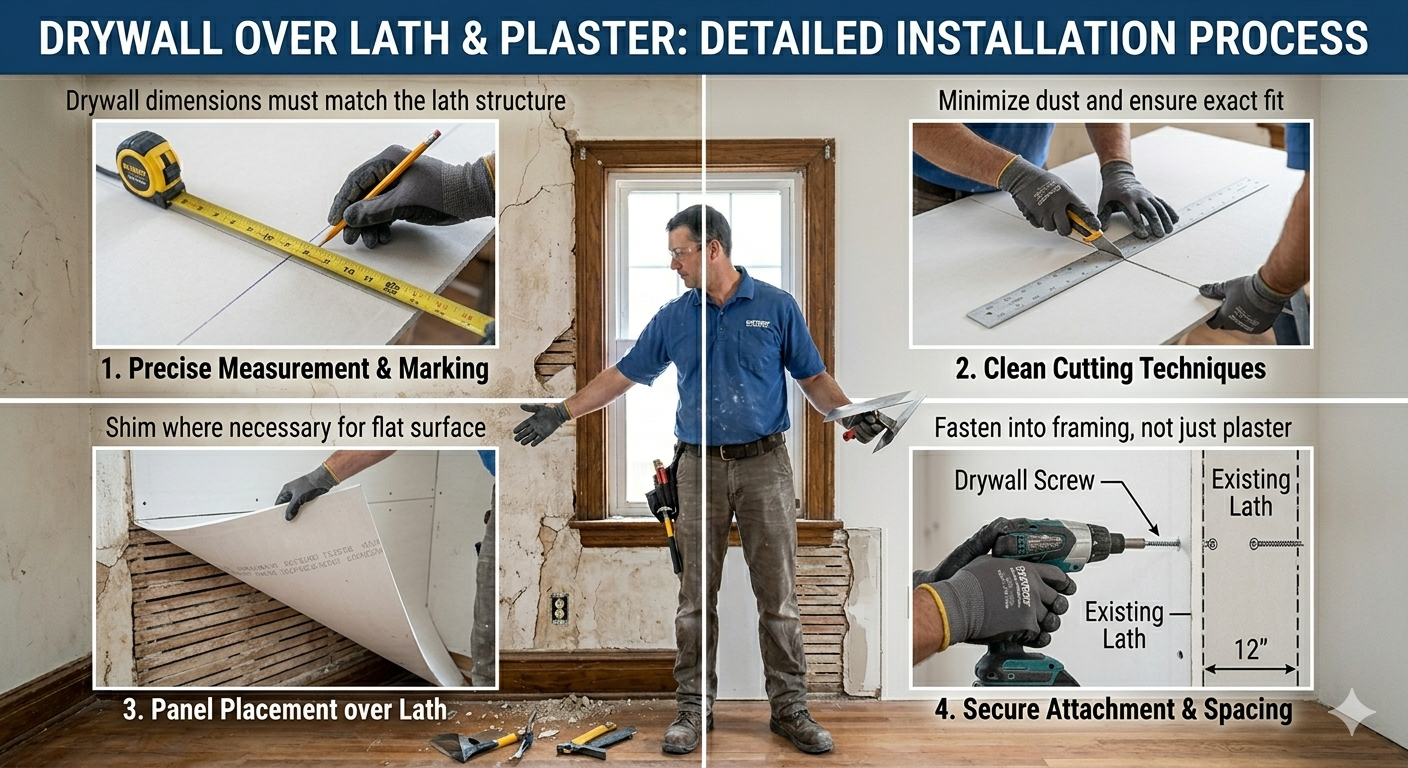
Drywall goes by several names within the construction industry. Contractors also call it wallboard, plasterboard, or sheetrock. The material consists of mineral core pressed between two thick sheets of paper, creating panels that install faster than traditional lath and plaster.
Within the trade, professionals use specific terminology that homeowners may find helpful:
- Taping: Applying paper or fiberglass tape over joints
- Mudding: Spreading joint compound over tape and screw heads
- Floating: Feathering compound edges for invisible transitions
- Skim coating: Applying thin compound layers across entire surfaces
How to Become a Professional Drywaller
Entering the professional drywall trade typically begins with apprenticeship programs or on-the-job training under experienced finishers. Most regions require 3,000 to 4,000 hours of supervised work before achieving journeyman status.
The path generally follows these steps:
- Start as a helper or laborer on drywall crews
- Learn hanging techniques before advancing to finishing
- Master basic taping and first-coat applications
- Progress to final coats and texture matching
- Develop specialty skills like Level 5 finishes or decorative textures
Certifications from recognized trade organizations add credibility. Physical stamina matters significantly since the work involves lifting heavy panels, working overhead, and standing for extended periods.
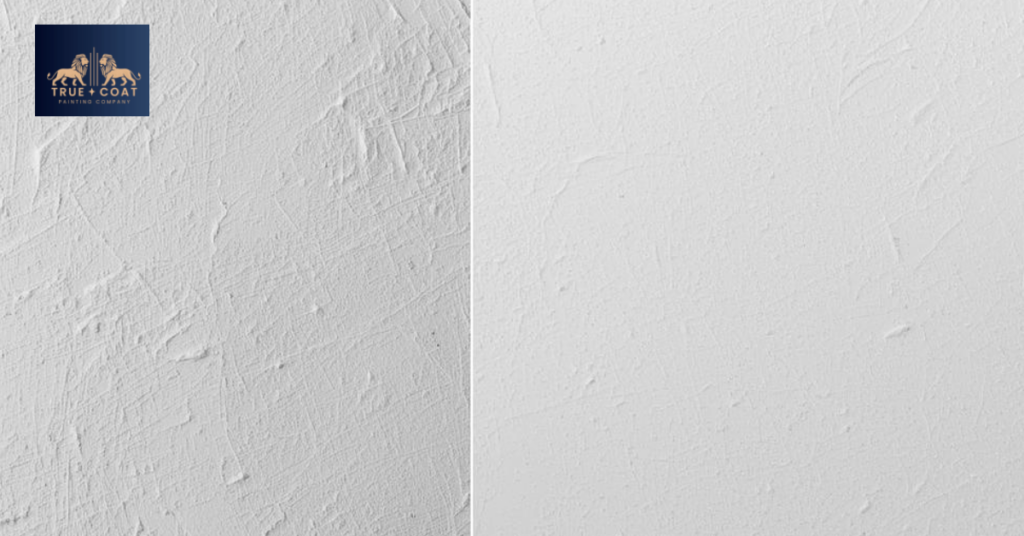
Can You Paint Directly on Drywall
Painting directly on bare drywall without primer leads to disappointing results. The paper facing absorbs paint unevenly, creating blotchy appearances and requiring extra coats to achieve coverage. Joint compound areas absorb differently than paper surfaces, resulting in visible flashing where seams exist.
Proper preparation follows a specific sequence:
- Allow joint compound to cure completely (24-48 hours minimum)
- Sand all surfaces smooth with 120-150 grit sandpaper
- Wipe down walls to remove dust
- Apply appropriate primer designed for new drywall
- Allow primer to dry according to manufacturer specifications
- Apply finish paint coats
Residential painting that boosts property value always starts with properly prepared surfaces. Skipping the primer step creates problems that become increasingly difficult to correct later.
How Professionals Prime Drywall
Expert painters approach priming new professional drywall with products specifically formulated for the task. Drywall primers remain the industry standard for new installations. These water-based products seal the porous surface, creating uniform absorption rates across the entire wall.
| Primer Type | Best Use Case | Dry Time |
| Drywall Primer | New drywall, general purpose | 1-2 hours |
| Shellac Primer | Stain blocking, odor sealing | 45 minutes |
| High-Build Primer | Covering minor imperfections | 2-3 hours |
| Bonding Primer | Glossy or difficult surfaces | 1 hour |
Application techniques matter as much as product selection. Professionals use roller covers with appropriate nap lengths, typically 3/8 inch for smooth walls. They maintain wet edges to prevent lap marks and apply consistent pressure for even coverage.
Cutting in around edges with brushes happens before rolling large areas. Back-rolling immediately after spraying ensures proper film thickness without runs or sags. True Coat’s team understands that quality results for Winnipeg homes depend on these foundational steps.
Two Common Mistakes Made During Drywalling
Insufficient Drying Time Between Coats
Rushing joint compound applications ranks among the most frequent errors both amateurs and hurried professionals make. Each mud coat needs adequate cure time before sanding or applying subsequent layers. Wet compound trapped beneath dry surfaces eventually cracks, bubbles, or separates from the tape.
Temperature and humidity dramatically affect drying rates. Cold, damp conditions extend cure times significantly. Professionals monitor environmental conditions and adjust schedules accordingly rather than relying on arbitrary timelines.
Improper Tape Embedding
Failing to fully embed paper tape into the first coat of joint compound creates problems that surface months or years later. Air pockets beneath tape eventually cause bubbling, peeling, or cracking. The tape must contact wet compound across its entire width without wrinkles or folds.
Fiberglass mesh tape offers more forgiveness but requires additional compound to build proper thickness. Paper tape delivers superior results when applied correctly but punishes poor technique severely.
Levels of Drywall Finish Explained
Industry standards define five levels of finish quality, each suited to different applications and final treatments:
Level 1– Basic coverage with tape embedded in compound. Suitable for areas above ceilings or in spaces requiring smoke and fire barriers only.
Level 2– One additional coat over tape and fasteners. Appropriate for garages, warehouses, or areas receiving tile.
Level 3– Two coats over tape, one over fasteners. Acceptable for textured finishes or wallpaper.
Level 4– Three coats over tape, two over fasteners. Standard for most residential and commercial painting applications.
Level 5: Skim coat over entire surface after Level 4 completion. Required for critical lighting conditions, high-gloss paints, or enamel finishes.
Most homes receive Level 4 finishes, which provide smooth surfaces suitable for standard paints. Expert commercial painting in Winnipeg often requires Level 5 finishes in lobbies, showrooms, and executive offices where lighting conditions reveal even minor imperfections.
When to Call Professionals for Drywall Work
Certain situations clearly warrant professional drywall intervention rather than DIY attempts:
Water damage affecting multiple panels or structural components requires expert assessment and remediation. Mold growth behind damaged drywall presents health hazards that professionals address with proper safety equipment and protocols.
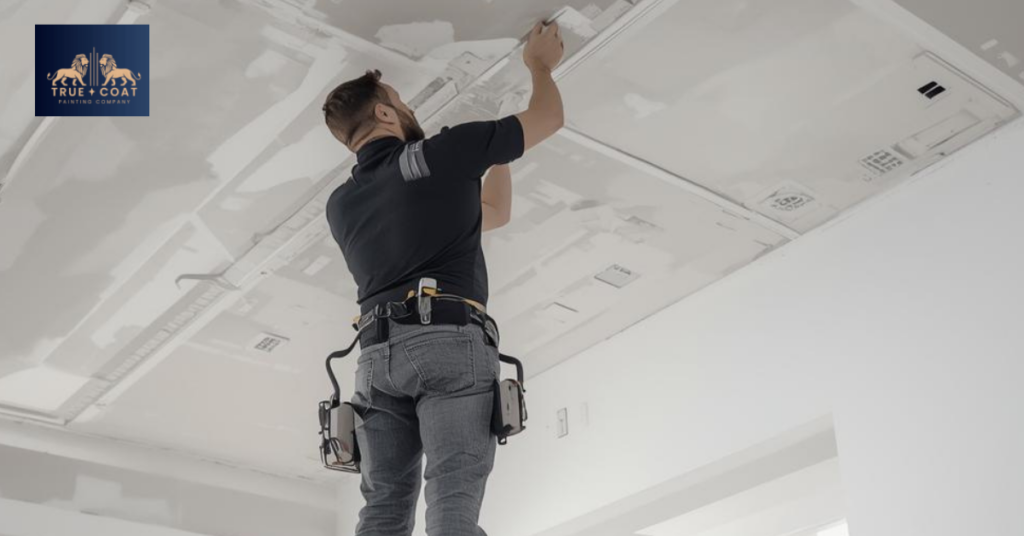
Ceiling repairs challenge even experienced DIYers due to awkward positioning and the effects of gravity on wet compound. Professionals use specialized equipment and techniques developed specifically for overhead applications.
Matching existing textures demands skill and experience that develops over hundreds of projects. Popcorn, orange peel, knockdown, and smooth finishes each require different tools, techniques, and compound consistencies.
Large-scale renovations benefit from professional efficiency and consistent quality across all surfaces. Contact True Coat for assessments on projects of any size.
The Connection Between Professional Drywall and Paint Quality
Superior paint jobs begin with superior wall preparation. The relationship between substrate quality and finish appearance cannot be overstated. Even premium paints cannot overcome fundamentally flawed surfaces beneath them.
Professional drywall work creates the smooth, uniform canvas that allows paint to perform optimally. Proper finishing techniques eliminate the need for multiple extra coats that waste time and materials. Light reflection across well-prepared surfaces remains consistent, avoiding the shadows and highlights that reveal poor workmanship.
Limewash painting techniques and other specialty finishes demand especially well-prepared surfaces. These transparent or semi-transparent treatments reveal every flaw in the underlying drywall work.
Choosing the Right Professional Drywall Contractor
Evaluating potential contractors requires attention to several factors beyond price alone:
- Ask for examples of completed work comparable to your needs. Commercial projects, residential renovations, and new construction each present unique challenges.
- Verify current credentials and adequate coverage. Legitimate contractors provide documentation willingly.
- Contractors should explain their process, timeline, and pricing structure without hesitation. Vague answers often signal problems ahead.
- Past client feedback reveals patterns in quality, reliability, and professionalism that matter for your project.
True Coat maintains full licensing and insurance while delivering premier painter services throughout Winnipeg. Our team handles both the structural preparation and the beautiful finishes that transform ordinary spaces.
Wrapping Up
Investing in professional drywall services delivers value that extends far beyond the initial installation or repair. Properly finished walls provide the foundation for decades of beautiful paint applications, easy maintenance, and lasting structural integrity. Whether addressing water damage, preparing new construction, or upgrading outdated surfaces, working with experienced professionals ensures results that satisfy both immediately and over time.
True Coat brings years of expertise to every project across Winnipeg, combining skilled craftsmanship with quality materials and genuine care for client satisfaction. From skim coating damaged surfaces to complete room renovations, professional drywall work makes everything that follows look better and last longer.
Frequently Asked Questions
What is the professional name for drywall?
Wallboard or plasterboard is the professional and technical name for drywall. Other industry terms include sheetrock. The material consists of mineral core pressed between paper sheets.
How to become a professional drywaller?
Complete 3,000-4,000 hours of apprenticeship under experienced finishers. Start as a helper, learn hanging techniques first, then progress to taping and finishing. Certifications from trade organizations strengthen credentials.
Can you paint directly on drywall?
No, primer application is necessary first. Bare drywall absorbs paint unevenly, creating blotchy results. Joint compound and paper surfaces absorb differently, causing visible flashing without proper priming.
How do professionals prime drywall?
Drywall primer applied with rollers creates the standard approach. Professionals use 3/8-inch nap roller covers, maintain wet edges, and ensure complete coverage. Back-rolling after spraying ensures proper film thickness.
What are two common mistakes made during drywalling?
Rushing dry time and improper tape embedding cause most failures. Insufficient curing traps moisture that later cracks or bubbles. Poorly embedded tape eventually peels or separates from the surface.