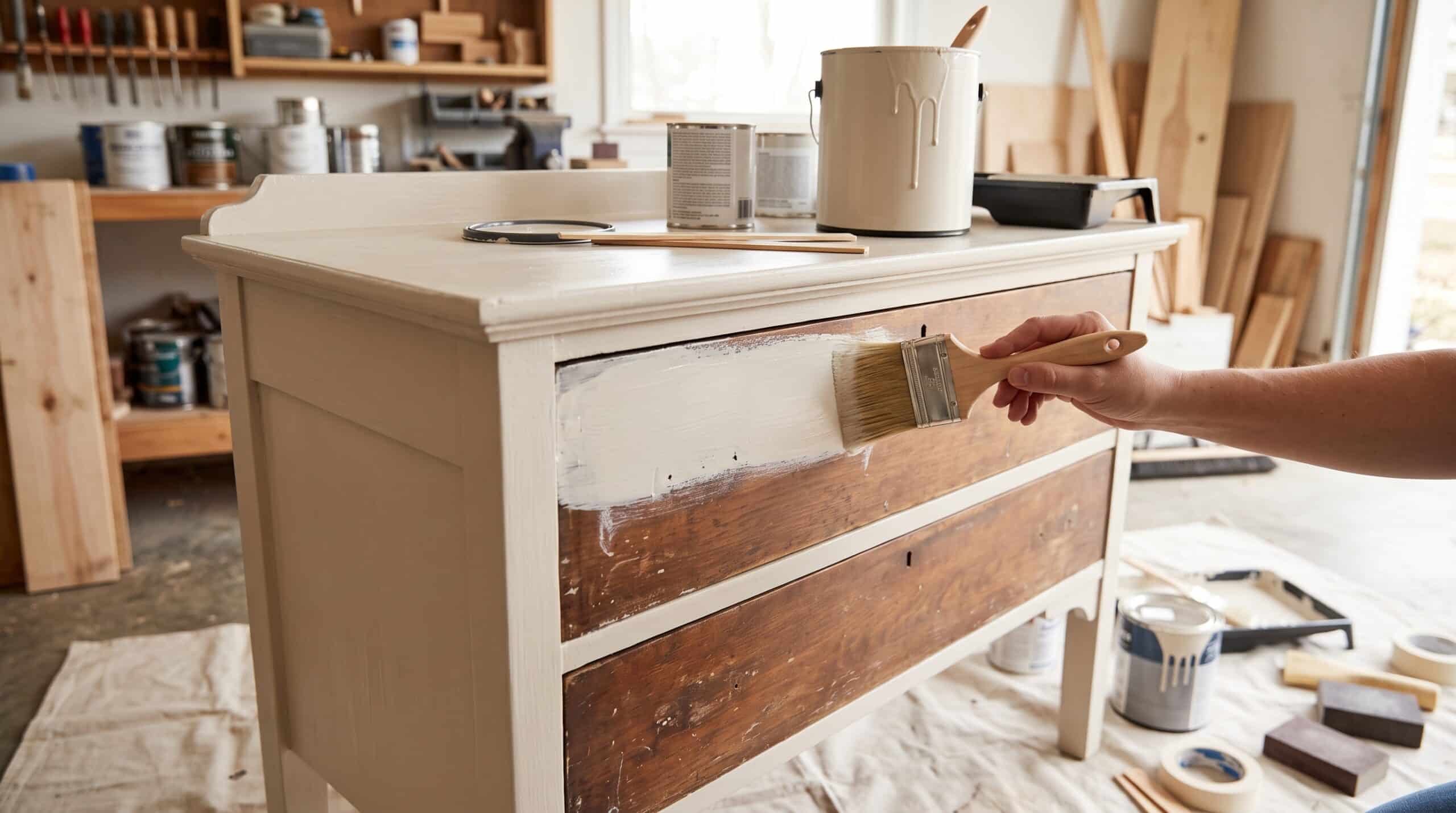
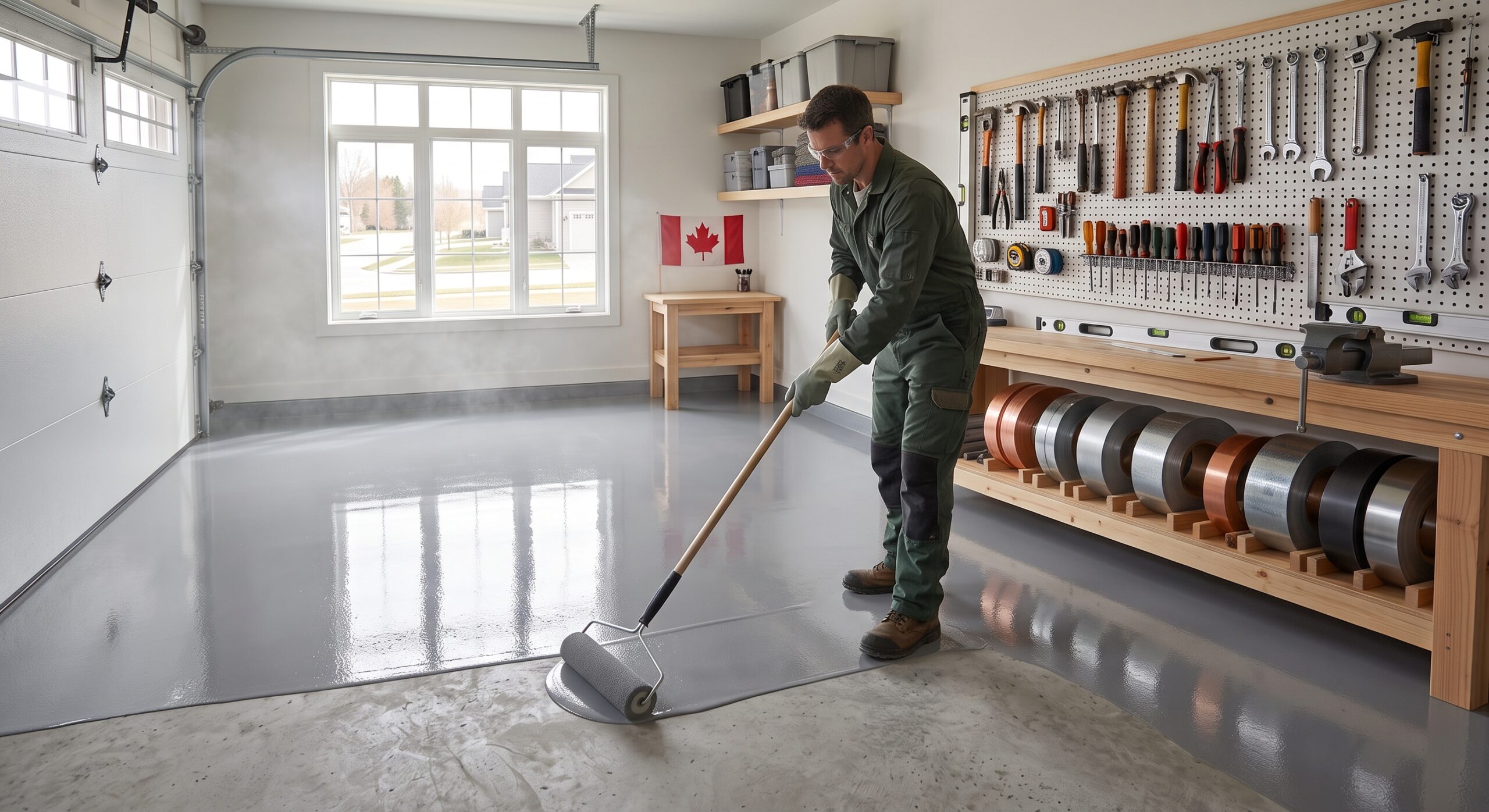
To paint garage floor surfaces properly, you need to clean and prep the concrete first, then apply a floor-specific coating like epoxy or latex.
Skipping prep is the number one reason paint peels fast. So if you want a finish that actually lasts through Canadian winters, the prep stage matters just as much as the paint itself.
Most homeowners think painting a garage floor is just rolling on some paint and calling it done. But there’s more to it than that. You’ve got to test for moisture, etch the concrete, patch the cracks, and pick the right product for your climate.
Get those steps right and you’ll end up with a clean, durable floor that holds up for years. Skip them and you’ll be redoing the whole thing in a season.
What Paint Works Best to Paint Garage Floor?
Not all paints are made for concrete. Regular wall paint won’t cut it on a garage floor because concrete is porous, shifts with temperature, and takes on a lot of abuse from cars, tools, and foot traffic. So when you go to paint garage floor surfaces, you want a product built for that kind of wear.
Epoxy Floor Paint
Epoxy is the most popular choice and for good reason. It bonds hard to concrete, resists oil and chemical spills, and holds up well under heavy use. It comes in two parts you mix together before applying. The result is a tough, glossy finish. The downside? It takes longer to cure and is a bit harder to apply if you’ve never done it before.
Latex Concrete Paint
Latex paint is easier to work with. It goes on like regular paint, dries faster, and cleans up with water. It won’t be as tough as epoxy long-term, but for a lightly used garage or a weekend project, it’s a solid option. It’s also more forgiving if the floor has some imperfections.
Concrete Stain
This one soaks into the concrete instead of sitting on top. It gives the floor a natural, matte look. It’s not as protective as epoxy, but it works well if you want something low-maintenance and don’t need heavy-duty durability.
| Paint Type | Durability | Ease of Use | Best For |
| Epoxy | High | Moderate | Heavy-use garages, car traffic |
| Latex Concrete Paint | Medium | Easy | Light-use garages, beginners |
| Concrete Stain | Low-Medium | Easy | Aesthetic look, low traffic areas |
How to Prep the Floor Before You Paint Garage Floor
Prep is everything. You can spend money on the best epoxy out there, but if the floor isn’t ready, it won’t stick. Here’s how to do it properly.
Step 1: Clear and clean the floor. Move everything out. Sweep up dust and debris, then scrub the floor with a degreaser. Any oil stains need to be fully lifted before you move forward. If there’s grease soaked into the concrete, you may need to scrub multiple times.
Step 2: Check for moisture. Tape a piece of plastic to the floor and leave it for 24 hours. If there’s condensation underneath, you have a moisture problem. Painting over a damp slab leads to bubbling and peeling. You’d need to address drainage or ventilation before continuing.
Step 3: Etch the concrete. This opens up the surface so the paint can grip. Use an acid-based etching solution or a mechanical grinder if the floor is in rough shape. After etching, rinse it thoroughly and let it dry completely.
Step 4: Patch any cracks. Use a concrete filler or patching compound. Let it dry and sand it flush. A smooth surface means a smoother finish.
Step 5: Let it fully dry. Don’t rush this. Concrete needs at least 24 to 48 hours of drying time after cleaning and etching before you apply anything.
How to Paint Garage Floor Step by Step
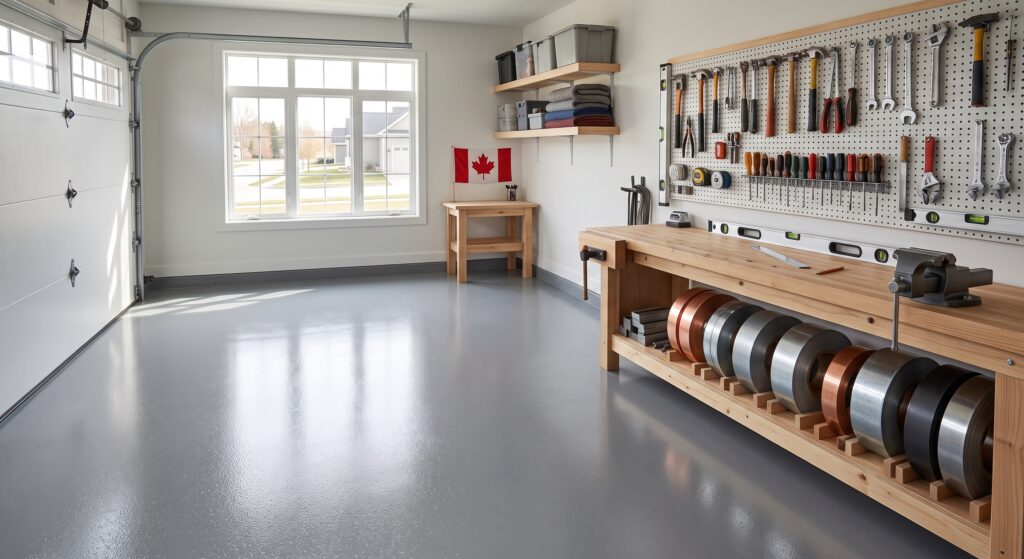
Once the floor is prepped, you’re ready to actually paint garage floor surfaces. Here’s the basic process.
Start by cutting in around the edges with a brush. Get into the corners and along the walls where a roller won’t reach. Then use a long-handled roller to coat the main floor area. Work in sections and keep a wet edge so you don’t get lap marks.
If you’re using epoxy, mix it according to the instructions and don’t let it sit too long after mixing. Epoxy starts to harden once the two parts combine. Move steadily and don’t stop mid-section.
Apply at least two coats. Let the first coat dry fully before adding the second. Most products need 24 hours between coats. After the final coat, wait the full cure time, which can be anywhere from 48 hours to 7 days depending on the product, before parking a car on it.
A few practical tips:
- Work from the back of the garage toward the door so you don’t paint yourself into a corner
- Wear slip-resistant shoes since the wet surface gets slick fast
- Keep the space ventilated, especially with epoxy, because the fumes are strong
- Add anti-slip additive to the top coat if your area gets wet or icy
What Are the Most Common Mistakes When You Paint Garage Floor?
A lot of DIY paint jobs fail not because of the paint but because of the process. Here are the mistakes that show up most often.
Skipping the moisture test. Concrete looks dry on the surface but can hold moisture underneath. Paint applied over a damp slab won’t bond and starts peeling in a few months.
Not etching the surface. Smooth concrete is too slick for most paints to stick. Without etching or grinding, you’re basically painting on glass.
Painting in cold temperatures. Most floor coatings need temperatures above 10°C to cure properly. In Winnipeg, that rules out most of the year if you’re doing this in an unheated garage. Plan for spring or early summer if you can.
Using the wrong product. Regular floor paint sold for basements won’t hold up the same way as a product rated for garage use. Check the product specs before you buy.
Rushing the dry time. Getting impatient and walking on it too soon, or driving on it before it cures, wrecks the whole job. Follow the cure time on the label, not what seems like enough.
| Common Mistake | Why It’s a Problem | Fix |
| Skipping moisture test | Paint bubbles and peels | Test with plastic sheet for 24 hrs |
| No etching | Paint won’t bond to smooth concrete | Acid etch or mechanical grind first |
| Cold temperatures | Paint won’t cure properly | Wait for temps above 10°C |
| Wrong product type | Poor durability and adhesion | Use garage-rated floor paint |
| Rushing dry time | Surface damage before full cure | Follow full cure time on label |
Things To Know Before You Paint Garage Floor
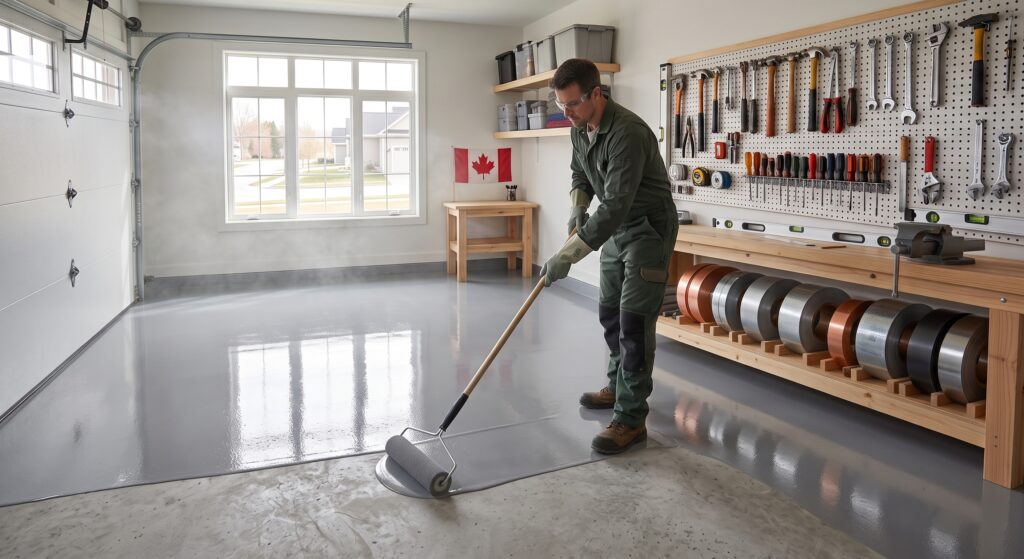
Before you start the project, here are a few things worth knowing upfront:
- New concrete needs to cure for at least 60 days before you paint it. Fresh slabs off-gas and the paint won’t stick.
- Epoxy and latex both need a second coat. One coat rarely gives full coverage or durability.
- You can add color flakes to epoxy while it’s still wet. They give the floor texture and make it look more like a finished space.
- If your garage floor has a lot of old paint on it already, you’ll need to strip it before applying a new coat. Painting over peeling paint just traps the problem.
- Temperature and humidity on the day you apply paint affects how it cures. Avoid rainy or very humid days.
If you want to see what quality workmanship looks like on surfaces like these, check out the True Coat projects page for real examples of their work.
When Should You Hire a Pro to Paint Garage Floor?
Some garage floors are easy enough to DIY. But some situations are better left to someone who does this regularly.
If your floor has heavy cracking, major oil contamination, or moisture coming up through the slab, those problems need more than a fresh coat of paint. A professional can assess the concrete properly and recommend the right solution instead of guessing.
Also, if you want a high-end epoxy system with multiple layers, color flakes, and a topcoat sealer, getting that right takes skill. Mistakes with epoxy are expensive to fix because you have to grind it all off and start over.
True Coat is a licensed and insured painting company in Winnipeg that handles both residential and commercial spaces. If your garage floor needs more than a weekend project, contact True Coat for a free estimate. You can also check out the financing options available if you’re planning a bigger upgrade.
And if you’re working on the rest of the house too, it’s worth reading up on what the best approach to exterior painting looks like or how residential painting in Winnipeg works before you start.
Frequently Asked Questions
What is the best paint to use when you paint garage floor?
Epoxy is the best option for most garages. It’s durable, stain-resistant, and bonds well to concrete. Latex concrete paint works for lighter use, but epoxy holds up better under car traffic and heavy loads.
How long does it take to paint garage floor from start to finish?
The whole process takes about three to five days. Prep takes one to two days, applying two coats adds another two days, and you need to wait for the full cure before using the space. Don’t rush it.
Can you paint garage floor without etching the concrete?
Not recommended. Without etching, the paint won’t bond properly and will start peeling within a few months. Etching is a non-negotiable step if you want the finish to last.
Does it matter what temperature it is when you paint garage floor?
Yes, it matters a lot. Most floor coatings require temperatures above 10°C to cure correctly. Applying in cold conditions leads to poor adhesion and a finish that won’t hold up.
How long does paint garage floor coating last?
A properly applied epoxy floor can last five to ten years. Latex coatings typically last two to five years. Longevity depends on how well you prepped the surface, how many coats you applied, and how much traffic the floor gets.