
How Does Painting Deck Work and What Makes It Last Longer?
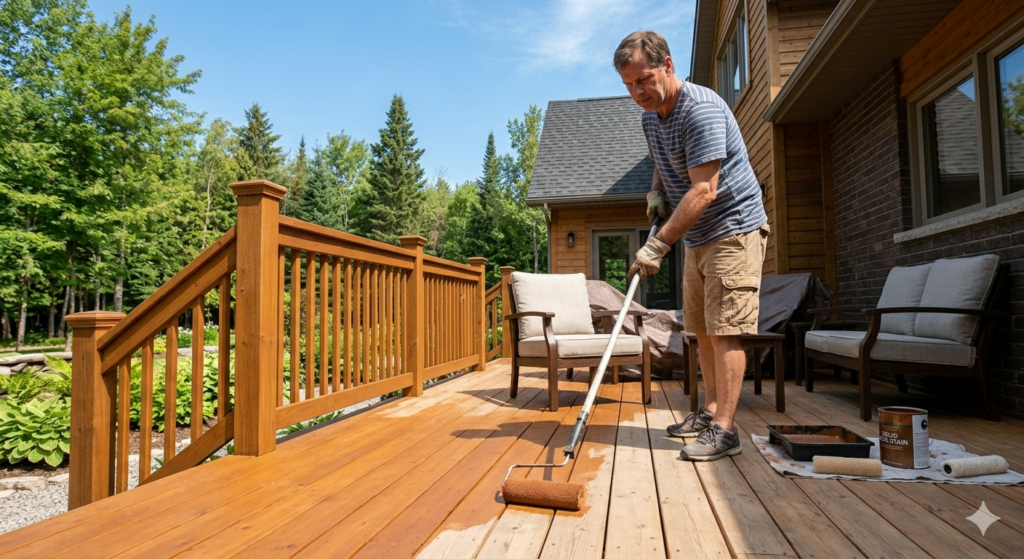
Painting deck the right way protects wood from moisture, UV damage, and heavy foot traffic for three to five years. Prep the surface, let it dry fully, prime bare wood, apply two thin coats of 100% acrylic exterior deck paint, and paint between May and September when temps stay above 10 degrees Celsius. Solid paint works best on older or weathered wood. Two coats beat one thick coat every time. Skip prep and the paint peels within a season. What Is Painting Deck and Why Does It Matter? Painting deck means applying a protective coating directly onto the wooden surface of your outdoor deck. It is not the same as staining, though the two are often confused. Paint sits on top of the wood and creates a solid film, while stain soaks into the grain. For Winnipeg homeowners, painting deck matters because outdoor wood faces extreme temperature swings from summer heat to below-freezing winters. Without protection, wood absorbs moisture, swells, cracks, and eventually rots. A quality paint job, done correctly, can protect deck wood for three to five years before needing a touch-up. Painting deck also adds visual appeal. A clean, solid colour gives the home a polished look and can increase property value. It is also one of the more affordable ways to improve the look of your backyard without replacing the entire structure. How to Prepare a Deck Before Painting Deck Surfaces Preparation is the most important part of any painting deck project. Skipping prep is the number one reason paint peels early. Step 1: Clean the Surface Start by sweeping the deck to remove loose dirt, leaves, and debris. Then wash the wood with a deck cleaner or a mixture of water and mild cleaner. For older decks with mildew or graying, a pressure washer works well. Keep the pressure low enough to avoid raising the wood grain. Step 2: Let It Dry Completely After washing, allow the deck at least 48 to 72 hours of drying time before painting deck surfaces. Wood that still holds moisture will cause the paint to bubble and peel. Step 3: Sand and Repair Sand rough areas, splinters, and any raised grain using medium-grit sandpaper. Check for loose nails or screws and hammer or tighten them down. Fill cracks and small holes with exterior wood filler, then sand again once dry. Step 4: Apply Primer Priming is especially important for new wood or previously bare surfaces. A quality exterior primer helps paint bond to the wood and improves coverage. Skip the primer and you may need extra coats to get an even finish. Paint vs. Stain: Which Option Is Best for Painting Deck? This is one of the most common questions when it comes to painting deck, and the answer depends on the condition of your wood and your goals. Option Best For Lifespan Finish Look Solid Paint Old or weathered decks, covering damage 3 to 5 years Opaque, solid colour Semi-transparent Stain Newer wood, showing natural grain 2 to 3 years Natural, tinted Solid Stain Mid-condition decks 3 to 4 years Opaque but thinner than paint Clear Sealant Brand new or recently stained decks 1 to 2 years Clear, natural For most homeowners doing painting deck work on older or worn surfaces, solid paint or solid stain is the better choice. It hides imperfections, covers old coatings, and provides stronger moisture protection. If the wood is in good shape and you want the grain to show through, a semi-transparent stain works well. What is the best option for painting deck in Winnipeg? A 100% acrylic exterior deck paint with a low-sheen or satin finish handles temperature swings well and resists cracking in freeze-thaw cycles. Look for paint rated for floor or deck use specifically, as wall paint is not designed for foot traffic. When Is the Right Time for Painting Deck in Canada? Timing your painting deck project correctly makes a big difference in how the finish holds up. For Canadian climates, the general rule is to paint when temperatures are between 10 and 30 degrees Celsius and when no rain is expected for at least 48 hours after application. Late spring through early fall is ideal for painting deck in Winnipeg. That typically means May through September. Avoid painting deck in full direct summer sun because the paint can dry too fast on a hot surface, leaving brush marks and reducing adhesion. Morning is the best time of day to start. The surface temperature is cooler, humidity is usually lower, and you have the full day ahead for the paint to cure before evening moisture settles in. Tools and Techniques for Painting Deck Like a Professional Getting the tools right speeds up the painting deck process and gives better results. For painting deck boards specifically, work with the grain rather than across it. Apply two thin coats rather than one thick coat. Thick coats trap air and are more likely to peel. Let the first coat dry fully before applying the second, usually four to six hours depending on the product and weather. How Many Coats Does Painting Deck Require? Most painting deck projects require two coats for even coverage and proper protection. New, bare wood or previously unpainted surfaces may need three coats if the first coat soaks in heavily. Surface Condition Coats Recommended New bare wood (primed) 2 coats after primer Previously painted, good condition 1 to 2 coats Weathered wood, stripped back 2 to 3 coats Painted over, worn through 2 coats after spot repair Allow full drying time between each coat. Painting deck too soon after the first coat can cause lifting or uneven texture. Read the product label for specific recoat times, as they vary by brand and temperature. Things To Know About Painting Deck Before you start your painting deck project, here are practical tips that can save you time and money: Why Hire a Professional for Painting Deck Projects? Some painting deck jobs are straightforward for a confident DIYer. However, larger