
What Is a Limewash Accent Wall and Why Should You Try It?
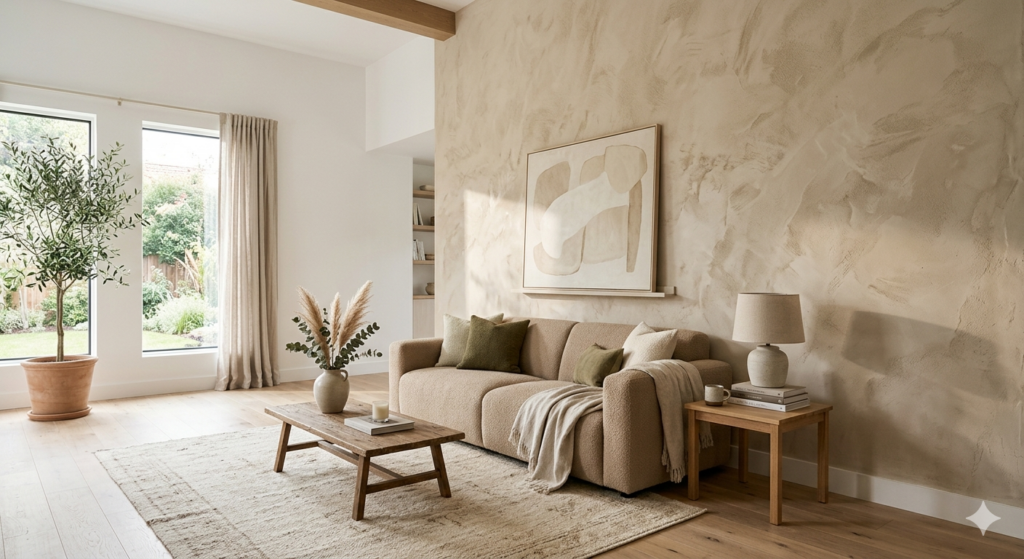
A limewash accent wall is one of the most effective ways to add depth, character, and warm texture to a room without overwhelming the space. It works on brick, drywall, and plaster, making it one of the most flexible wall treatments in Canadian homes today. This post covers why it works, how to apply it properly, which rooms benefit the most, how long it lasts, and whether the investment is worth it. What Is a Limewash Accent Wall? A limewash accent wall is a single wall treated with limewash paint, a centuries-old finish made from slaked lime and water, sometimes tinted with natural pigments. Unlike regular paint, limewash soaks into the wall surface rather than sitting on top of it. The result is a layered, matte, slightly translucent look that shifts in different lighting throughout the day. The reason it works so well as an accent is because limewash naturally creates variation in colour and tone. No two applications look exactly the same, which means your limewash accent wall becomes a genuinely unique feature in your space. That visual texture is exactly what makes it so appealing in interior design across Canada right now. It works especially well on brick or plaster, but it can also be applied to drywall with the right preparation. The key is a clean, slightly porous surface that allows the lime solution to bind properly. Why a Limewash Accent Wall Works So Well in Canadian Homes Canadian homes, particularly in cities like Winnipeg, often feature open-plan living areas, high ceilings, or wide feature walls that can feel flat or cold with standard paint. This type of finish solves that by adding warmth and visual movement to a single surface without requiring a full renovation. Here is why homeowners keep choosing it: If you are already thinking about a full refresh, combining a limewash accent wall with updated interior painting services can completely transform how a room feels. Which Walls Work Best for a Limewash Accent Wall? Not every wall in your home will benefit equally from this treatment. Choosing the right wall is actually one of the most important decisions you will make. Best Rooms and Wall Positions for a Limewash Accent Wall Living Room Feature Wall The wall behind a sofa or fireplace is the most popular choice. It immediately draws the eye and anchors the room. Neutral tones like clay, sand, or pale terracotta work especially well here. Bedroom Headboard Wall The wall behind the bed is a natural focal point. A limewash accent wall in a soft sage, warm white, or dusty blue creates a calming, spa-like atmosphere that feels both stylish and restful. Dining Room End Wall This treatment at the end of a dining room makes the space feel intentional and finished. Deeper tones like charcoal or burnt sienna can work well in dining spaces where you want a bolder statement. Home Office or Study A limewash accent wall behind a desk adds character to video calls and creates a more focused workspace without painting the entire room a distracting colour. Entryway or Hallway A narrow hallway or entry wall treated with limewash creates immediate visual interest when guests walk through the door. Room Best Wall Position Recommended Tone Living Room Behind sofa or fireplace Warm neutrals, clay, off-white Bedroom Behind the headboard Soft sage, dusty blue, warm white Dining Room End or feature wall Terracotta, charcoal, deep earth tones Home Office Behind the desk Stone grey, linen, muted sage Entryway The wall facing the front door Warm white, sand, pale clay How to Apply a Limewash Accent Wall the Right Way Getting the application right is what separates a beautiful result from a patchy, uneven mess. This is not a standard paint job. The process requires intentional technique to achieve that layered, organic look characteristic of a limewash accent wall. Step-by-Step Application Process Step 1: Prepare the Surface Clean the wall thoroughly. Remove any dust, grease, or flaking paint. If the wall has a glossy finish, lightly sand it or apply a bonding primer so the limewash has something to grip. Drywall should be sealed first with a water-based primer. Step 2: Mix the Limewash Correctly If using a pre-mixed product, follow the instructions. If mixing from scratch, the ratio is typically one part lime putty to two or three parts water. A thinner mix gives a lighter, more washed effect. Step 3: Apply the First Coat Use a wide, natural-bristle brush and apply in loose, overlapping strokes at different angles. Do not aim for uniformity. The variation in your brush strokes is what creates the texture. Work in sections and blend edges while still wet. Step 4: Dry and Layer Allow the first coat to dry fully, usually between two and four hours. Then apply a second coat for more depth. You can dampen sections with water before the second coat to create softer transitions. Step 5: Seal if Needed In high-traffic areas or rooms with moisture, a matte topcoat sealer can protect the finish without dulling the natural texture. For best results, especially on brick or uneven plaster walls, working with professionals who specialize in limewash painting in Winnipeg can save a lot of time and give you a much more consistent result. How a Limewash Accent Wall Compares to Other Accent Wall Options Before committing, it helps to see how this option stacks up against other popular accent wall choices. Accent Wall Type Texture Durability Eco-Friendly DIY Friendly Cost Range Limewash Paint High 5-7 years+ Yes Moderate Mid Standard Paint Low 3-5 years Varies Yes Low Wallpaper Medium-High 5-10 years Varies Moderate Mid-High Wood Panelling High 10+ years Depends Low High Venetian Plaster Very High 10+ years Yes No High This option sits comfortably in the middle. It offers more character than standard paint, costs less than wood panelling or Venetian plaster, and is more forgiving to update than wallpaper. For homeowners who want a designer look without a major renovation budget, it is often