
What Is a Drywall Sander and How Do You Use It the Right Way?
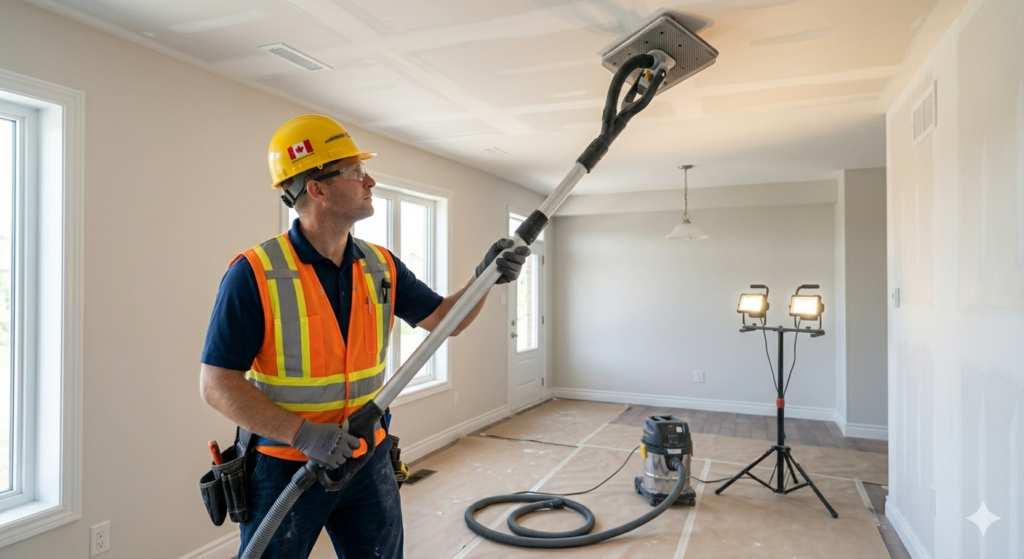
A drywall sander is a tool used to smooth dried joint compound on walls and ceilings, creating a flat, paint-ready surface after repairs or new drywall installation. Choosing the right drywall sander for your project saves time, reduces mess, and delivers a finish that looks clean and professional under paint. There are several types of drywall sanders available, from basic handheld blocks to electric models with built-in dust collection. The right choice depends on the size of your project, the location of the surface, and how much prep time you want to spend. Getting the grit level right also matters, since using the wrong screen can scratch the surface or leave it too rough for painting. What Is a Drywall Sander? A drywall sander is a tool made specifically for smoothing dried joint compound on drywall surfaces. It is different from a wood sander because it uses mesh screens instead of solid sandpaper. The mesh lets fine compound dust fall through rather than clogging the surface, which keeps the screen cutting evenly for longer. Joint compound is applied in layers during taping and finishing. Once each coat dries, it leaves ridges, tool marks, and feathered edges that must be sanded flat before paint goes on. Without sanding, these imperfections show through even after multiple coats of paint. The drywall sander is the tool designed for this step. It covers the surface in even passes, knocking down high spots and blending transitions between the compound and the surrounding wall. What Are the Different Types of Drywall Sanders? The type of drywall sander that works best depends on the size of the area, the height of the surface, and how much detail work is involved. Each type has specific strengths. Pole Drywall Sander A pole drywall sander has an extendable handle that lets you reach ceilings and high walls without a ladder. The head pivots to follow the wall angle. It is the most popular choice for finishing large flat surfaces because it moves quickly across wide areas and reduces back strain compared to working by hand. Hand Drywall Sander A hand drywall sander is a flat block held directly in your palm. It is the right tool for corners, edges, window and door trims, and small repair patches. It gives you full control over pressure and direction, which matters a lot in tight spots where a pole sander cannot fit properly. Electric Drywall Sander An electric drywall sander spins or oscillates the sanding head automatically, cutting down on manual effort. Many professional models connect directly to a vacuum for dust-free operation. This type is efficient on large commercial or residential projects where speed and cleanliness both matter. Orbital Sander on Drywall An orbital sander is not a dedicated drywall tool, but it works on small patches in a pinch. The circular motion leaves fewer marks than a straight-line sander, but standard sandpaper clogs quickly on joint compound. For anything beyond a single small patch, a proper drywall sander is the better choice. Here is a quick comparison to help you decide which type fits your project: Sander Type Best For Key Advantage Pole Drywall Sander Large walls and ceilings Covers wide areas, reduces strain Hand Drywall Sander Corners, edges, small patches Precise control in tight spots Electric Drywall Sander Large professional projects Speed and built-in dust collection Orbital Sander Small patches, flat surfaces Versatile, widely available How Do You Use a Drywall Sander Correctly? Using a drywall sander properly is just as important as choosing the right one. Poor technique causes gouges, uneven areas, and extra coats of compound to fix the damage you created. Start by confirming the joint compound is fully dry. Sanding wet compound clogs the screen fast and tears the surface. A dry coat will look lighter in color and feel firm when you press it lightly. Set up dust control before you start. Drywall dust spreads quickly and settles on every surface in a room. Seal off doorways with plastic sheeting if needed, and wear a dust-rated respirator. Attach a 100 to 120 grit screen to your drywall sander for the main smoothing pass. Begin with longer strokes across the flat surface, keeping pressure even throughout. Avoid pressing harder in any single spot as this risks cutting through the compound and into the drywall paper underneath. After your main pass, hold a work light at a low angle to the wall. This raking light highlights any remaining bumps or depressions. Do a second light pass with 150 grit to bring the surface fully smooth before applying primer. Which Grit Should You Use on a Drywall Sander? The screen grit on your drywall sander controls how aggressively it cuts and how smooth the surface ends up. Using the correct grit at each stage makes the whole process faster and protects the wall from damage. Grit Level Stage of Work What It Does 60 to 80 Grit First pass, rough sanding Removes ridges, bumps, and joint lines 100 to 120 Grit Second pass, smoothing Blends seams and flattens surface 150 to 180 Grit Final pass, finishing Creates a paint-ready smooth finish A practical tip: always start with the coarser grit to remove bulk material, then move up to finer screens to refine the finish. Trying to smooth a rough surface with fine grit wastes time and wears out the screen quickly. Practical Tips for Using a Drywall Sander More Effectively A few habits make drywall sander work much more manageable, especially for first-time users or anyone doing a large room. For more on surface preparation and wall smoothing, read our post on skim coating a ceiling for a flawless finish. When Is It Better to Hire a Professional for Drywall Sanding? Not every drywall sander project is a good fit for DIY. Some situations call for professional help, particularly in older Winnipeg homes where walls may have multiple repair layers or hidden damage underneath the compound. If you are finishing an entire room or several rooms after