
How Can You Successfully Paint in Cold Weather? Complete Guide for Winnipeg Homeowners
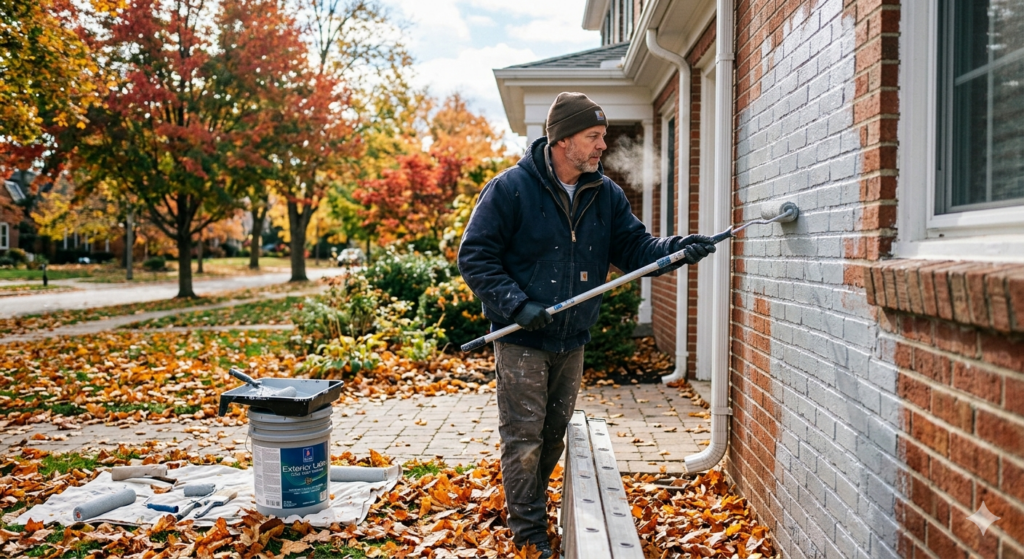
Paint in cold weather requires careful planning to avoid costly failures. Temperatures below 50°F slow paint drying, weaken adhesion, and can ruin your finish before it cures. The chemical process transforming wet paint into durable coating needs warmth to work properly. Cold conditions make paint thick and difficult to apply, while moisture from dew or frost gets trapped beneath surfaces, causing bubbling and peeling. Success is possible with cold-weather paint formulas, proper timing, and temperature monitoring. Can You Paint in Cold Weather Successfully? Paint in cold weather is possible with proper techniques and products. Temperature affects every painting stage. Paint contains pigments, binders, and solvents undergoing chemical transformation to become protective coating. When temperatures drop, this process slows or stops completely. Cold paint becomes thick and hard to spread evenly. You’ll see streaks and lap marks. Moisture from morning dew and frost creates additional problems when you paint in cold weather. Trapped moisture under paint film causes bubbling and poor adhesion that ruins your work. Surface temperature matters as much as air temperature. Shaded walls stay cold even when air temperature seems adequate. Most standard paints need 50°F or above for 48 hours after application to cure properly. Temperature Range Paint Behavior Recommended Action Above 50°F Normal drying Ideal conditions 40-50°F Slower drying Cold-weather formulas only 35-40°F Delayed curing High failure risk Below 35°F Cannot cure Do not paint Professional painters track daytime highs and nighttime lows because overnight drops ruin fresh paint. This matters for exterior painting projects facing temperature fluctuations. What Happens If I Paint in Cold Weather? Painting without proper precautions creates immediate and long-term problems. Cold paint is thick and difficult to work with from opening the can. It doesn’t flow smoothly onto brushes or rollers, making even coverage nearly impossible. Paint sits on top of cold surfaces rather than bonding properly. Within weeks, it begins lifting, especially in moisture-exposed areas. Frost forming before paint cures creates tiny ice crystals disrupting the film, leaving pockmarks and weak spots. Long-term consequences include poor durability and premature failure. Blistering and peeling occur when trapped moisture expands during warmer weather, pushing paint away from surfaces. Color problems emerge from uneven curing. Some areas appear darker or lighter as paint ages. For residential painting in Winnipeg, avoiding these problems means timing projects carefully and understanding how to paint in cold weather conditions properly. Will Paint Dry in 40 Degree Weather? Paint can dry in 40-degree weather, but success depends on paint type and conditions. Standard latex paints struggle at this temperature, while cold-weather formulas handle these conditions better. Many confuse drying with curing. Drying means the surface feels dry within hours. Curing is the complete chemical process hardening paint throughout, taking days or weeks. At 40°F, latex paint may feel surface-dry but hasn’t cured underneath, remaining soft and vulnerable. Specialized cold-weather paints cure at lower temperatures, working in conditions as low as 35°F. These formulas contain different binders remaining flexible in cold. Cold-weather formulas cost more but prevent failures requiring complete repainting. Even with these products, you need several hours above 40°F for proper curing. Working with a Winnipeg painting company ensures you get products that work best for local conditions. Working with a Winnipeg painting company ensures you use the right products for local conditions. What Is the Coldest Temperature You Can Paint In? The coldest safe temperature to paint in cold weather is 35°F when using specialized formulas. Standard latex paints need 50°F or above, while regular oil-based paints require at least 40°F. Understanding these limits is critical for project success when you paint in cold weather. Standard Latex Paint requires minimum 50°F during application and for 48 hours afterward. Standard Oil-Based Paint needs at least 40°F, though 45°F provides better results. Cold-Weather Latex Paint is formulated to cure at temperatures as low as 35°F using modified binders. Acrylic Latex Paint falls between standard latex and cold-weather formulas, typically requiring 40-45°F minimum. Surface temperature matters as much as air temperature. Direct sunlight can warm walls 10-15 degrees above air temperature. Check surface temperature with infrared thermometer before starting. Working with True Coat ensures proper temperature monitoring. Is October Too Late to Paint Outside? October is not too late for exterior work in Winnipeg, but it requires careful planning and the right approach when you paint in cold weather. Early October typically offers suitable weather, while late October becomes risky as temperatures drop and conditions become unpredictable. Early October daytime temperatures often reach 50-59°F, providing adequate conditions. However, nighttime temperatures frequently drop near or below freezing. The key is checking forecasts for 48-72 hours after application. A warm October day seems perfect, but overnight lows below 40°F prevent standard paint from curing and create lasting problems. Mid to late October brings increased frost risk. Frost forms at 32°F or below and damages fresh paint. Shortened daylight hours mean surfaces stay cooler longer, making success more difficult when you paint in cold weather. Success during October depends on choosing the right days and using appropriate products. Watch for weather patterns providing consistent temperatures for consecutive days. Cold-weather paint formulas are essential. Start early in the month when conditions are more stable. Complete projects by mid-October at the latest for optimal results. Focus on urgent repairs only in late October. For aesthetic projects, waiting until spring provides better conditions. Consult with the best house painters Winnipeg homeowners trust to evaluate whether October projects should proceed. How Cold Can Paint Get Before It’s Ruined? Paint can be damaged by cold before and after application. Stored paint freezes at 32°F, causing permanent damage. Fresh paint faces risks depending on curing time. Proper storage is essential whether you paint in cold weather or store leftover supplies. Latex paint freezes at about 32°F. When paint freezes, water forms ice crystals breaking apart chemical structure. Once thawed, frozen paint appears lumpy or separated. You cannot restore frozen latex paint to original quality because binders are permanently damaged. Store paint in climate-controlled spaces above 50°F. Keep